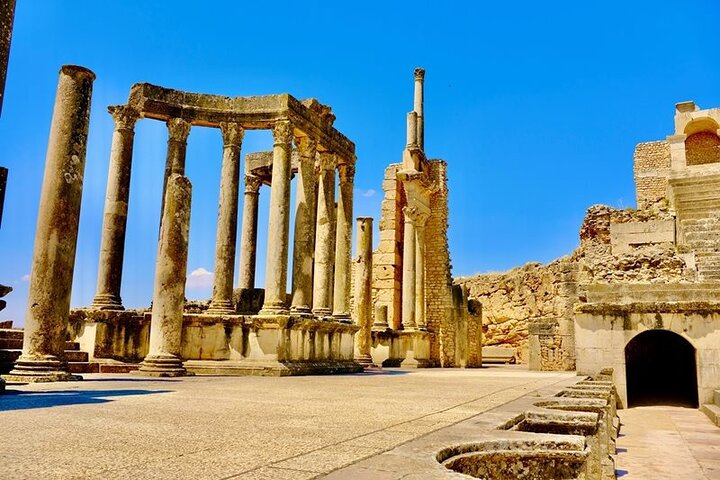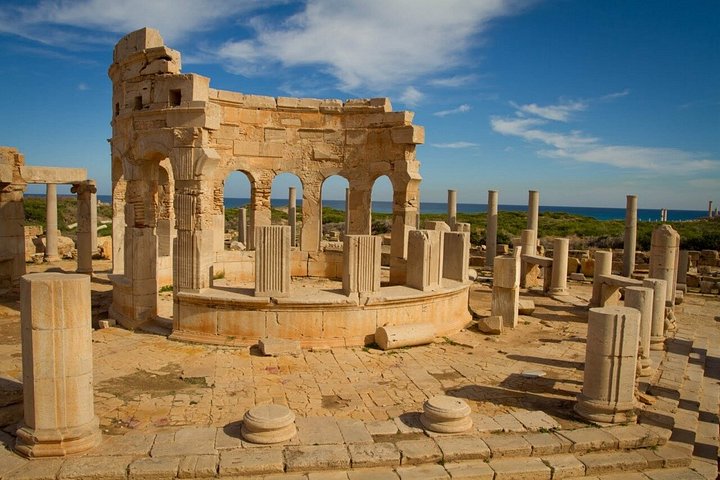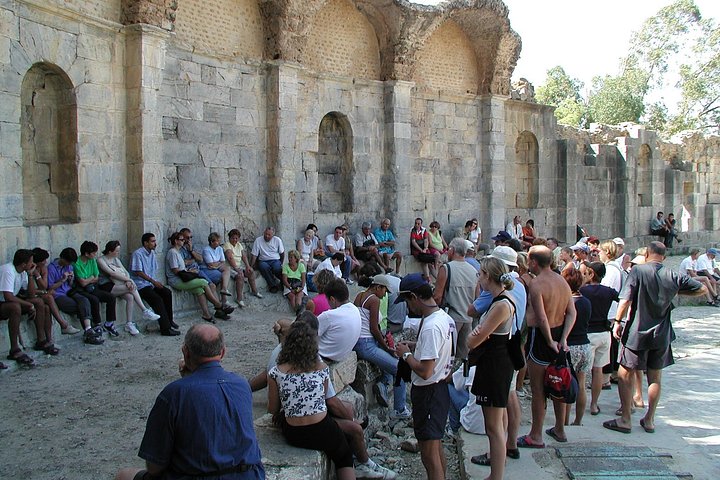
Zaghouan is a small town about an hour south of Tunis, set at the foot of a limestone mountain, and its great attraction is the Temple of Waters. In the second century the Romans harnessed the springs here to supply Carthage, building an aqueduct that ran well over a hundred kilometres across the plains to the city, one of the longest in the Roman world. At the source they built a monumental nymphaeum, a water sanctuary with a semicircular colonnaded structure, a row of niches that once held statues, and a basin where the springs gathered before flowing into the channel. The setting is lovely. Behind the ruin the rocky mountain rises steeply, in front the land falls away towards the plain, and you can still see water in the channels. It is a reminder that Roman engineering was as much about beauty and ceremony as practicality. Beyond the temple, the town of Zaghouan itself is worth a stroll. It was settled by Andalusian refugees from Spain in the seventeenth century, and the old quarter has quiet lanes, white houses and a tiled mosque, with a more local and less touristy feel than the coastal sights. The region is known for fresh water, orchards and a long tradition of rose and orange blossom distillation, and local shops sell floral waters and honey. Zaghouan is also a base for walks on the mountain, with trails that suit moderately fit walkers and offer views across the plain towards the sea.
How to include it
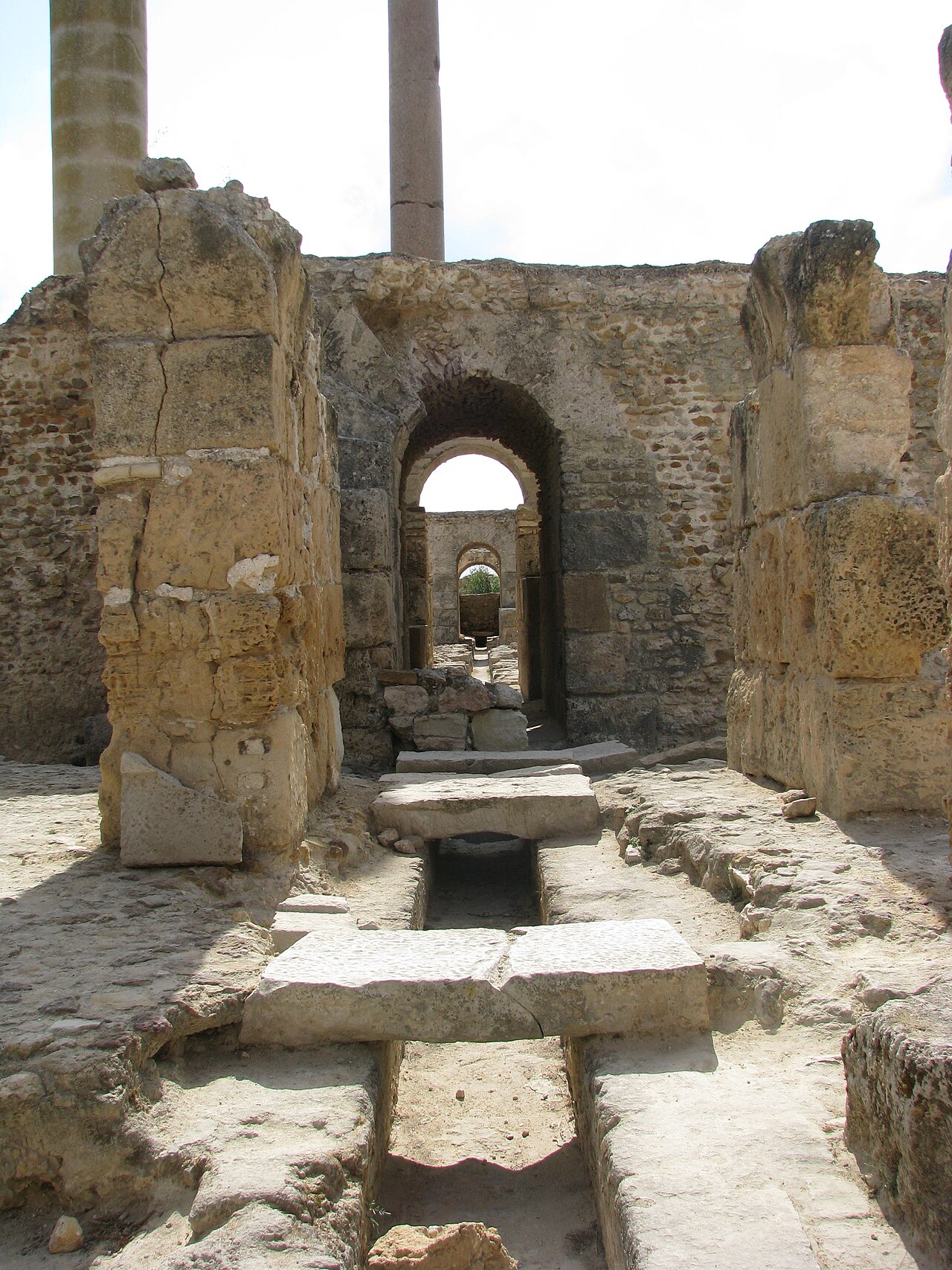
Zaghouan is an easy add-on rather than a stand-alone trip for many visitors, and it appears on a number of private tours that combine it with Oudhna and Thuburbo Majus, two other Roman sites in the same area. A day devoted to the Zaghouan region shows how the Romans supplied water to Carthage, from the source at Zaghouan, to the arches of the aqueduct across the plain, to the great cisterns at the end of the line.
If you only have half a day, Zaghouan with Oudhna is a good pairing. Allow around an hour at the temple, plus time for the town.
What to expect on site
The Temple of Waters is outdoors and unshaded, so go in the morning or late afternoon in summer. The paths are short but can be uneven, and the ground near the water can be wet and slippery. Bring a hat, sunscreen and water. There is usually little in the way of signage, so a guide adds a lot, explaining the route of the aqueduct and how the Romans used gravity to carry water such a distance.
Photographers enjoy the mountain backdrop, especially in the soft light of the early morning. Hours may vary with the season, and it is worth asking your operator to confirm on the day.
Who it suits
Travellers who like quiet places, engineering and landscape as much as monuments, and anyone who has done the main Roman sites and wants something calmer. Families with older children can combine the temple with a picnic or a lunch in town. Spring is lovely, with green slopes and wildflowers, and autumn is mild and clear. Winter can be cool and wet, and the mountain can be misty, so pack a layer. If you are staying on the coast near Hammamet, Zaghouan is also a convenient inland excursion.
What to expect
The experience
A guided visit to the Roman Temple of Waters at the foot of the mountain, a stroll through the old town, and often a stop at nearby Roman sites.
Best time
Morning or late afternoon, and spring or autumn, as the temple site has little shade.
How long
About an hour at the temple, within a half-day or full-day excursion.
Tips
Wear shoes with grip near the water, carry a hat and water, and ask your guide to trace the aqueduct route.
Quick picks
- Best for
- Quiet-place lovers and anyone curious about how the Romans supplied Carthage with water.
- Families
- A gentle outing with room to wander; short paths suit older children, and a picnic works well.
- Couples
- A calm half-day with mountain views, a stroll in the old town and floral waters to take home.
- Pair with
- Oudhna and Thuburbo Majus on the same trip, or a lunch in Zaghouan town.
- Time needed
- Half a day with Oudhna, or a full day with Thuburbo Majus.
Good questions
What is the Temple of Waters at Zaghouan?+
It is a Roman water sanctuary built at the source of springs that fed an aqueduct running all the way to Carthage. It has a semicircular colonnade, niches and a basin set against the mountain.
How far is Zaghouan from Tunis?+
About an hour by road, so it fits easily into a half-day or full-day excursion.
How long does the Roman aqueduct run?+
It ran well over a hundred kilometres from the springs at Zaghouan to the cisterns at Carthage, one of the longest aqueducts in the Roman world.
What else can I see near Zaghouan?+
Oudhna and Thuburbo Majus are the usual companions, and the old town of Zaghouan has Andalusian-style lanes and a tiled mosque.
When is the best time to visit?+
Spring and autumn are the most comfortable. In summer, go early or late in the day because the site has little shade.