Most visitors to Chengdu cover the same trio of day trips: Leshan, Dujiangyan and Mount Emei. They are excellent, but the real drama of Sichuan lies to the west, where the plain gives way to forested gorges, snow peaks and Tibetan villages. If you have an extra day or two, or you have already ticked off the classics, this guide explains how to go further, what to expect and how to keep yourself comfortable.
The geography in a paragraph
Chengdu sits on a flat, humid basin. Within a couple of hours the road climbs into the Qionglai mountains, and within a long day you can be among alpine meadows above the tree line. The main routes run north-west towards Jiuzhaigou and Huanglong, and west towards Wolong, Mount Siguniang and Bipenggou. Roads are good but winding, and landslides or weather can cause delays, so build some slack into every plan.
Wolong: pandas in the mountains
The Wolong reserve day trip is the natural next step after the city base. The journey is long, but the setting is far more dramatic, with cool air, steep slopes and a sense of being in real panda country. It is an ideal first stop on a longer western trip.
Mount Siguniang: the Four Sisters
The two-day Siguniang trip combines a stop at Wolong with valleys beneath four snow-capped peaks. Changping Valley is the easy option, with flat paths and wide views, while longer valleys suit stronger walkers. Plan an overnight stay, because trying to do it in a day means spending most of it in the car.
Bipenggou: a valley of lakes
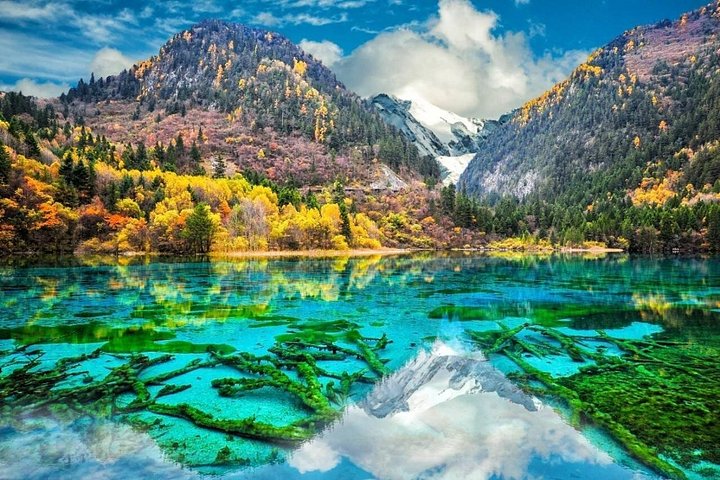
If a two-day trip is too much, the Bipenggou day trip offers alpine lakes, waterfalls and forest in one long day. It is especially lovely in autumn. For a bigger version of the same landscape, Jiuzhaigou and Huanglong deliver turquoise pools and terraced travertine, though they need at least three days with travel.
Altitude and health
The high valleys can leave you breathless, and some people get headaches or nausea. Ascend gradually, drink plenty of water, avoid alcohol on the first night and eat lightly. Tell your guide if symptoms worsen, and descend if needed. People with heart or lung conditions, or who are pregnant, should talk to a doctor before booking a high-altitude trip.
Seasons
Autumn is the best season, with crisp air, clear views and coloured foliage. Late spring and summer are green but wetter, and winter brings snow and possible road restrictions. Check conditions shortly before you travel, and remember that China’s national holidays bring heavy traffic and crowds.
What to pack
Layers are essential: a base layer, a fleece, a waterproof jacket, a hat and gloves for the cooler months. Bring sun protection, because UV is strong at height, plus sturdy shoes, a power bank and any medication you need. Mobile coverage can disappear in the valleys, so download maps and translation tools in advance.
Culture and courtesy
The west is home to Tibetan and Qiang communities. Ask before photographing people, dress modestly in villages and monasteries, and walk clockwise around stupas and prayer wheels. Buying local products, such as honey, tea and handicrafts, is a good way to support the people who live there.
Planning tips
Combine a western trip with the pandas in the city at the start or end of your stay, so you have rest days in between. Guided and private options remove the stress of mountain roads and language barriers. Leave a day of slack before any international flight, in case weather delays your return.
Booking and transport
Public transport to the mountain valleys is limited, and the last buses can leave early, so most visitors take a guided or private option that handles the driving, the park tickets and the timing. Reserve a few days ahead in busy periods, confirm what is included, and keep your passport with you, since checkpoints on the western roads can ask for identification.
A realistic itinerary
A four-day plan might be: day one in Chengdu to rest and see the pandas, day two to Wolong and an overnight near Siguniang, day three in the valleys and back toward the city, and day four a slow city day with food and tea. If you prefer one trip with one night away, Bipenggou or the two-day Siguniang tour will give you a taste without turning your holiday into an expedition.