Few regions are so closely tied to painters as Provence. Vincent van Gogh arrived in Arles in 1888 looking for light and colour and left a body of work that changed painting, and Paul Cézanne was born in Aix-en-Provence and spent most of his life painting the hills and quarries around it. Their places are scattered across the region, and following them gives a trip a clear structure. This guide sets out a route in two parts, with advice on how much to expect from each stop. Remember that most of what these artists painted is now in museums elsewhere, so you come for the places, the light and the atmosphere, not to see original paintings in the streets.
Arles: where Van Gogh worked at speed
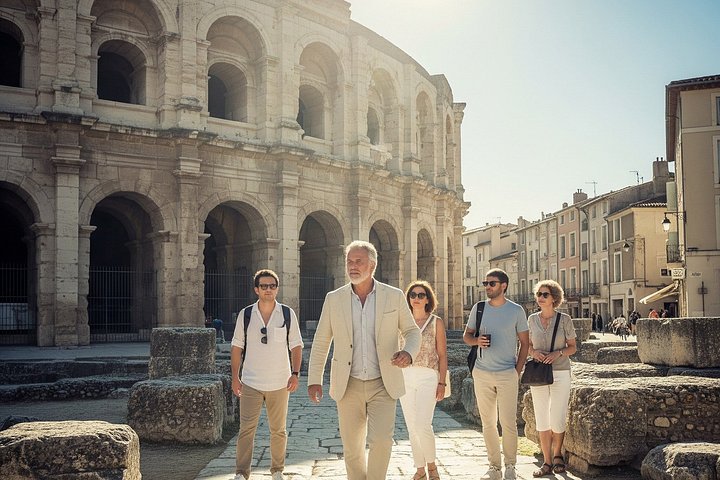
Van Gogh lived in Arles for about fifteen months, and in that time he painted hundreds of works, among them the cafe terrace at night, the bridge at Langlois and the fields along the Rhône. The Yellow House in which he lived was destroyed, but the town has marked a walking route with plaques at the spots where he set up his easel, and a self-guided walk with a map or an app is a pleasant way to find them. The Espace Van Gogh, a former hospital with a courtyard garden, shows the arcaded garden where he was treated after the breakdown in which he injured his ear. Allow a morning for these sites, and set aside time for the Roman amphitheatre and theatre, which stand a short walk away.
The Fondation Vincent van Gogh Arles
The Fondation occupies a historic townhouse and shows contemporary art in conversation with Van Gogh, often with a small number of his works on loan. It is not a big collection of his paintings, so go for the way it connects his work to later artists, and check what is on during your stay. It makes a good pairing with the walking route because it puts the town's view of him in context.
Saint-Rémy: the olive groves and the asylum
In May 1889 Van Gogh entered the asylum at Saint-Paul de Mausole, a former monastery on the edge of Saint-Rémy-de-Provence, where he stayed for about a year. He painted irises, olive trees, wheat fields and the starry sky seen from his window, and many of his most famous images date from this time. The cloister and the garden of the monastery are open to visitors, along with a reconstruction of a patient's room, and the walk from the town centre through the olive groves has panels showing the paintings made at each spot. Combine it with Glanum, which lies a short walk away, and with Les Baux and the Carrières des Lumières, whose immersive shows often feature painters.
Aix: Cézanne's city
Cézanne was born in Aix, left to work in Paris and returned again and again to paint the countryside. His great subject was Mont Sainte-Victoire, the white limestone mountain east of the city, which he painted dozens of times. In town, small bronze plaques with a letter C mark a walking route past places from his life, including his school, his father's bank and the cafes he knew. The Musée Granet holds works and has shown Cézanne in the past, and the Cours Mirabeau and the squares of the old town are the setting for his youth. His studio at Les Lauves is a separate visit, so check its status with the tourist office before you plan around it.
Out to the mountain
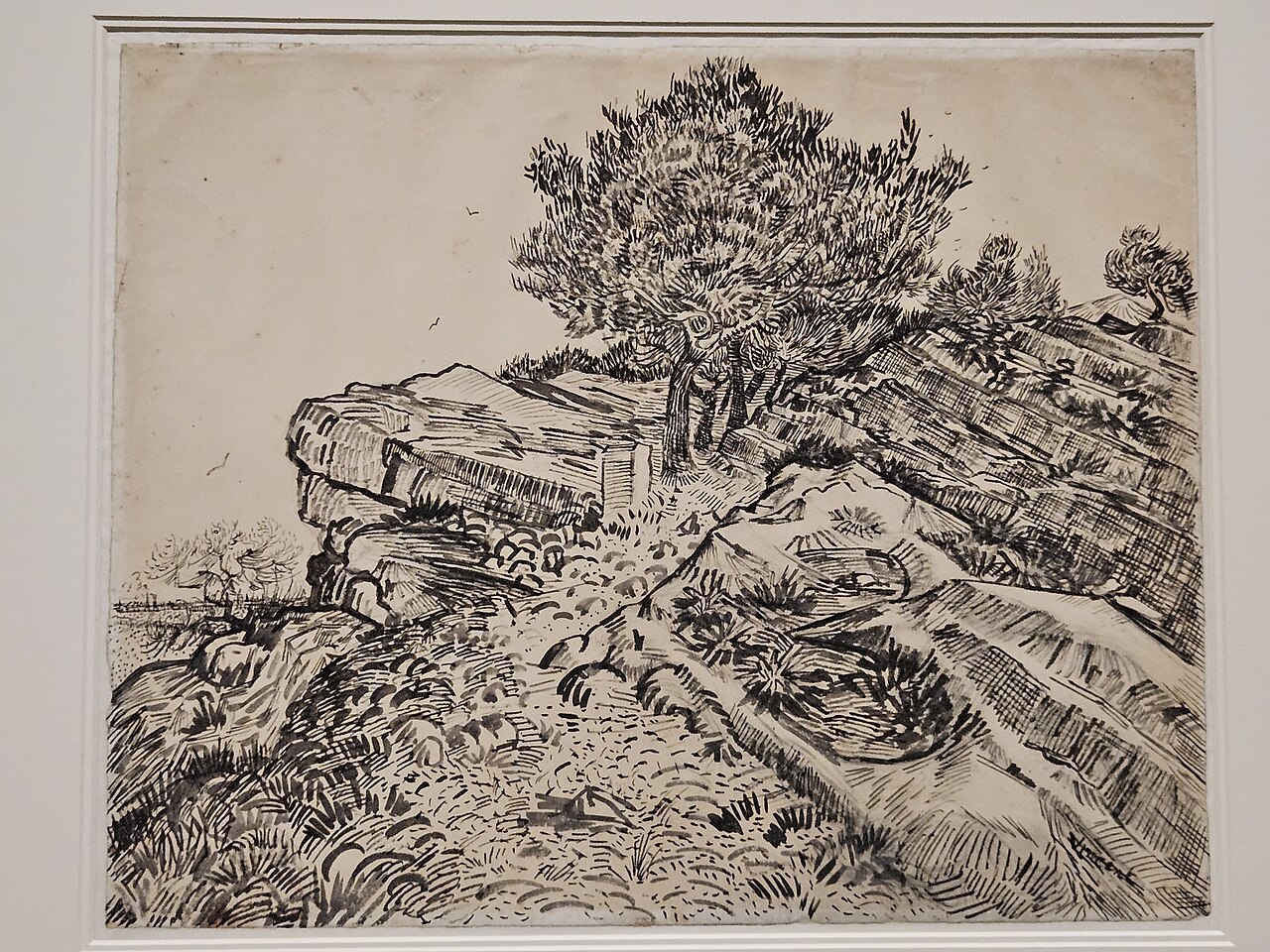
The country road east of Aix, now known as the Route de Cézanne, climbs toward the hills and gives views of Sainte-Victoire with the pines and quarries that he painted. The Bibémus quarries, the ochre-coloured stone pits where he worked, are visited on guided walks, and a half-day excursion by car, sidecar or small-group tour is the easiest way to see them. Take a hat and good shoes, since the paths are rocky and the sun is strong.
Putting it together
A good itinerary spends two nights in Arles and Saint-Rémy, then moves to Aix for two more. Start in Arles with the walking route and the Fondation, take a half day in Saint-Rémy and the Alpilles, and spend the third day on Cézanne's town and the mountain. If time is short, choose either the Van Gogh half or the Cézanne half, and do it properly. Spring and autumn give the softest light, which suits both painters, while summer is hot enough to make the middle of the day uncomfortable. Book timed entries where the sites offer them, and keep some time to sit in a cafe and look at what the painters saw.