Tunisian food is one of the quiet pleasures of the trip. It is Mediterranean in its ingredients, North African in its spices and French in its habits, and the result is cheap, generous and often fiery. Olive oil, tomatoes, peppers, eggs, tuna, lamb and preserved lemon turn up everywhere, and the national condiment, harissa, a paste of dried chillies, garlic, caraway and olive oil, appears on almost every table. Here is how to eat well in the capital.
Start with street food
The medina is the best place for the classics, and a guided tasting is the easiest way to find the stalls that locals use. Brik is a thin pastry parcel folded around an egg, often with tuna, parsley and capers, and fried until the shell is crisp and the yolk is still soft. Eating it neatly is a skill worth watching a local demonstrate. Lablabi is a chickpea soup poured over stale bread and finished with a poached egg, cumin, harissa, olive oil and lemon, a standard breakfast for workers. Fricasse is a small fried bun stuffed with tuna, olives, egg and harissa. Ojja is a spicy tomato and pepper stew with eggs and merguez sausage, served in a pan. Vegetarians can usually eat well on eggs, vegetables and cheese, though fish and meat are common, so say so early.
The main meal
Lunch is the big meal of the day, and many restaurants offer a fixed menu with a salad, a main course and a sweet. Look for couscous, the national dish, often cooked with lamb, vegetables and chickpeas and served in a deep dish. Seafood is excellent on the coast, with grilled fish, calamari and shrimp on offer in La Goulette, La Marsa and Gammarth. Kafteji, a mix of fried vegetables chopped with eggs, is a good side. Salade mechouia, a smoky grilled pepper and tomato salad with tuna and egg, comes with bread at many tables. Restored courtyard houses in the medina serve refined versions of the classics in a beautiful setting, and booking ahead for dinner is wise.
Sweets and cafes
Tunisians love pastry, and a sweet stop belongs in every day. Makroudh is a diamond of semolina dough filled with dates and soaked in syrup, and bambalouni is a fried doughnut dusted with sugar, eaten warm in the morning. Baklava, with a Tunisian accent of pistachio and almond, fills the windows of pastry shops. Cafes are the centre of social life, and a long stop with a glass of mint tea topped with pine nuts is the best way to rest between sights. In Sidi Bou Said, the tea with pine nuts, served with sweet doughnuts, is a ritual of the village. Strong Tunisian coffee, often scented with orange blossom water, is served in small cups.
Drinks and etiquette
Tea and coffee are the everyday drinks, and fresh orange juice is cheap and good, especially in the winter citrus season. Tunisia is a Muslim-majority country, and alcohol is available in licensed restaurants, hotel bars and some shops, while most small cafes do not serve it. Tap water is not recommended for visitors, so stick with bottled water. During Ramadan, many daytime eateries close or serve discreetly, and the evening meal, iftar, becomes a festive occasion, so plan accordingly and be respectful when eating or drinking in public during daylight hours.
Eating by neighbourhood
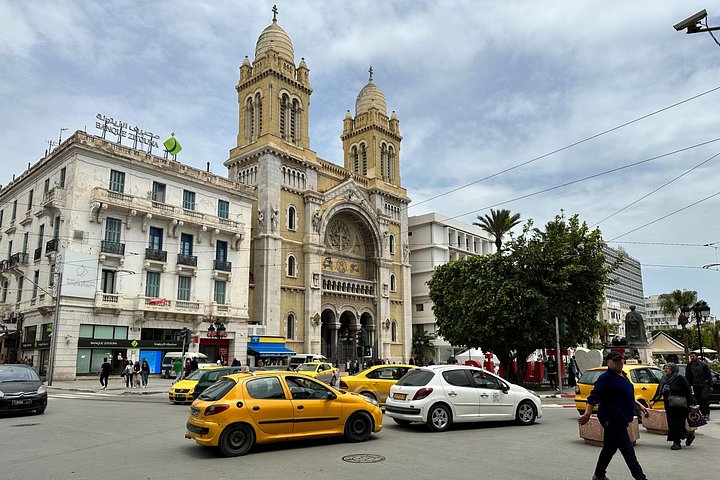
In the medina, aim for the small stalls and courtyard restaurants and eat early for the best choice. Around Avenue Habib Bourguiba you will find French-style cafes, pastry shops and quick lunch counters that suit a short break between sights. On the coast, La Goulette is the traditional place for grilled fish, and La Marsa and Sidi Bou Said have sea-view terraces that are best at sunset. Evenings start late, so do not be surprised if restaurants fill after eight. A good rhythm is a light breakfast of pastry and coffee, a big late lunch and a modest dinner.
Practical tips
Harissa can be very hot, so ask for it on the side. Eat at busy places with a steady turnover of customers, as a guide will, and carry hand sanitiser. Cash is useful at stalls and small cafes. If you enjoy what you taste, a cooking class is a good follow-up, and many visitors buy harissa, spices and olive oil to take home. Allow time for lunch to stretch, and avoid scheduling a big dinner after a long tasting.