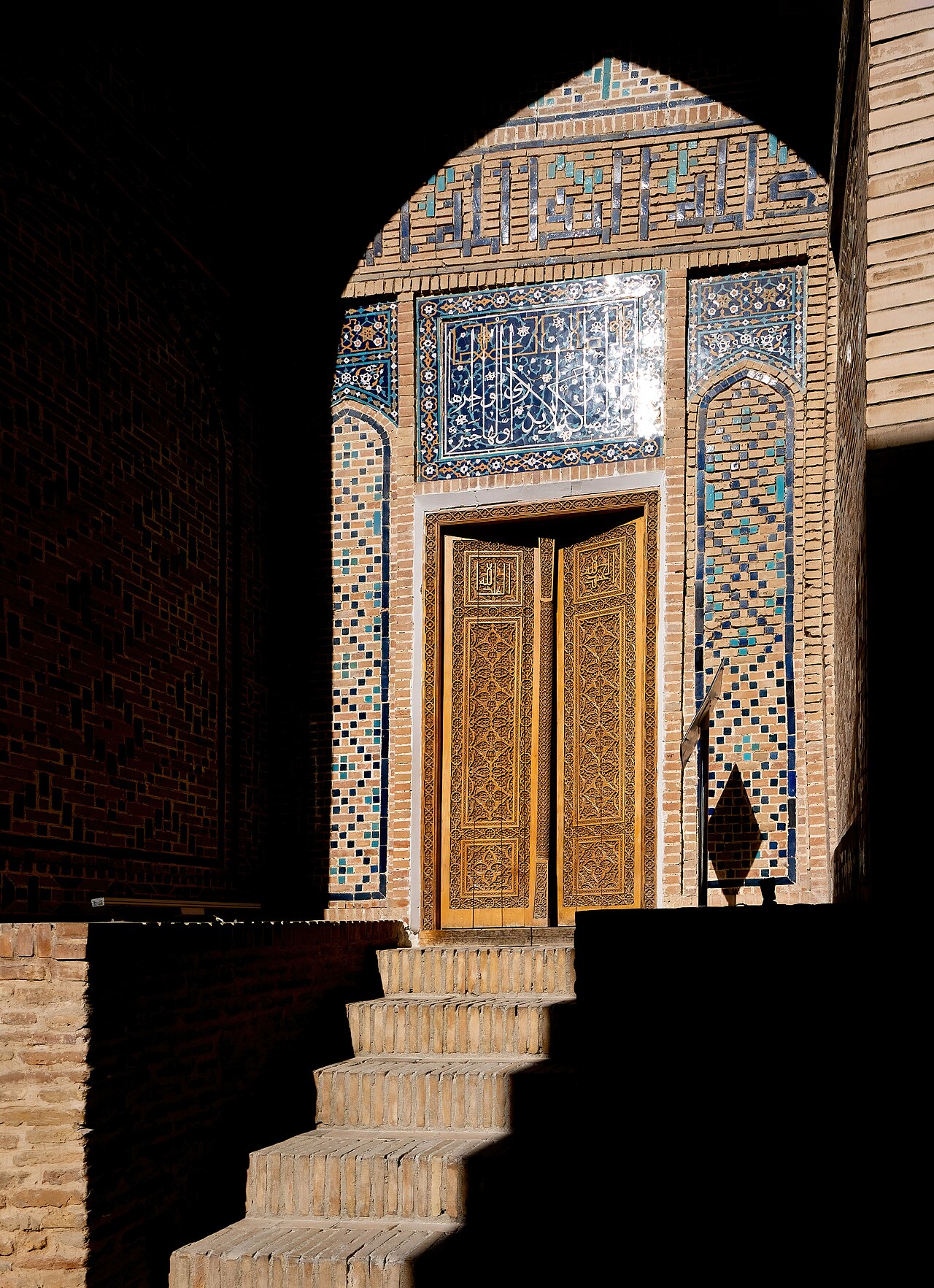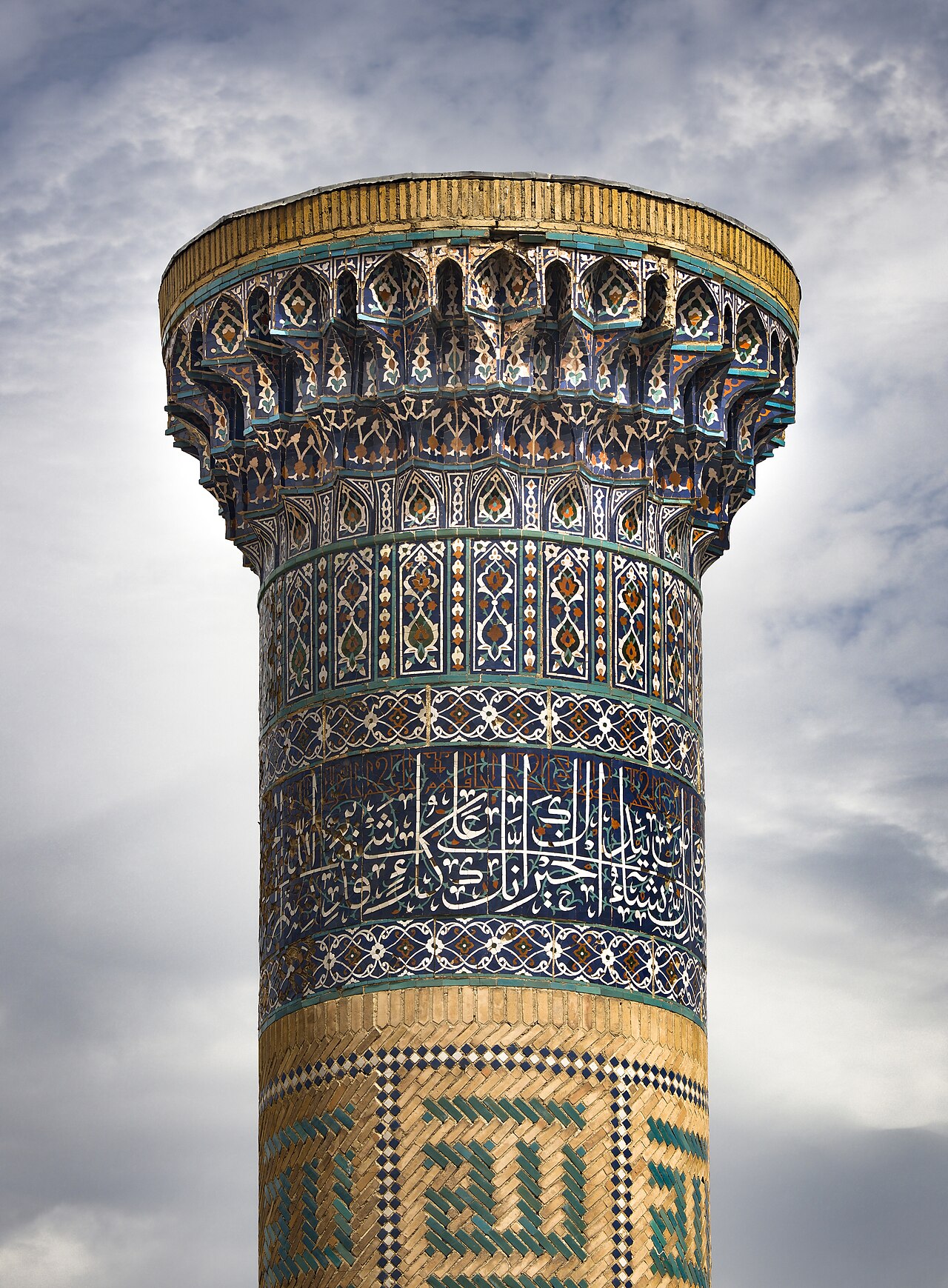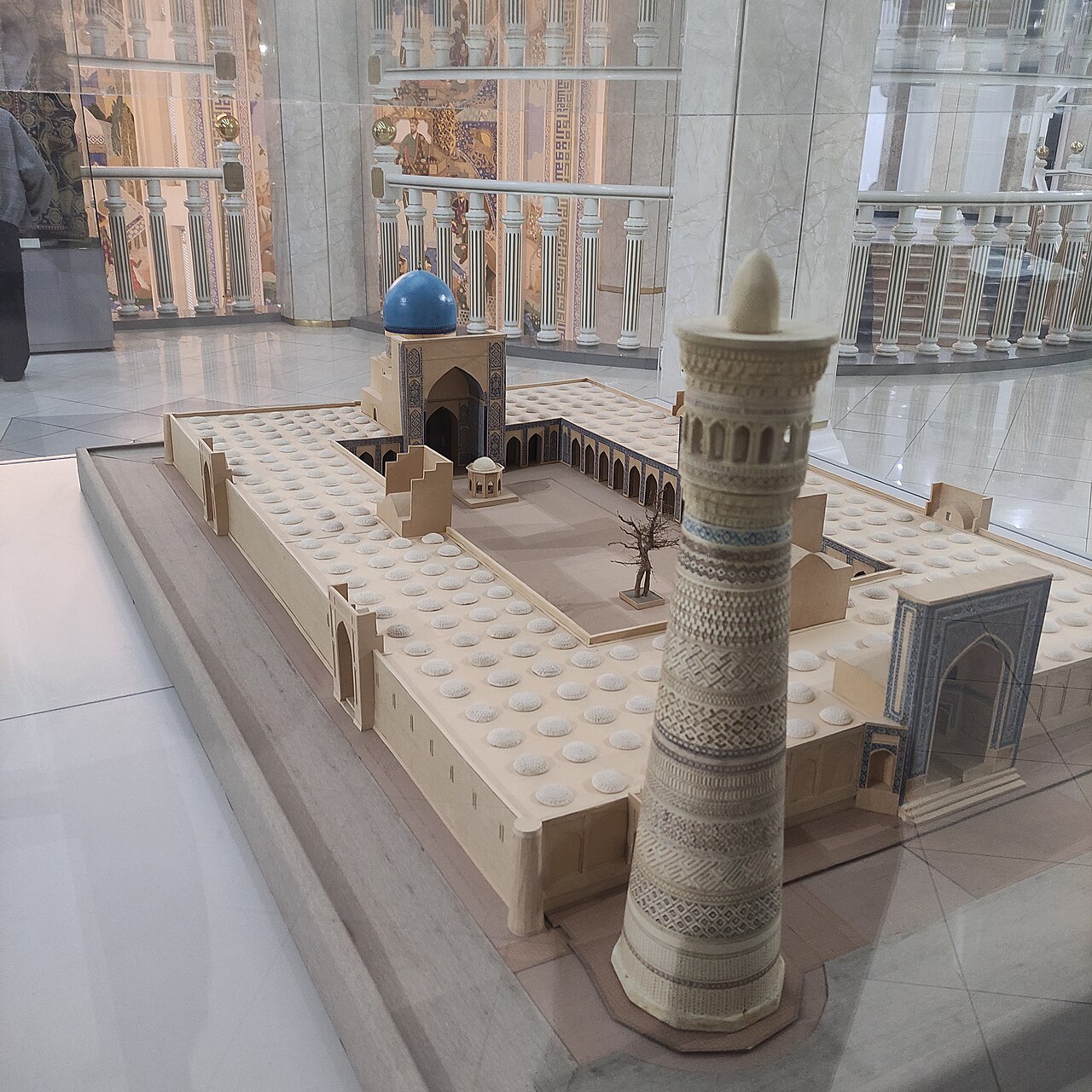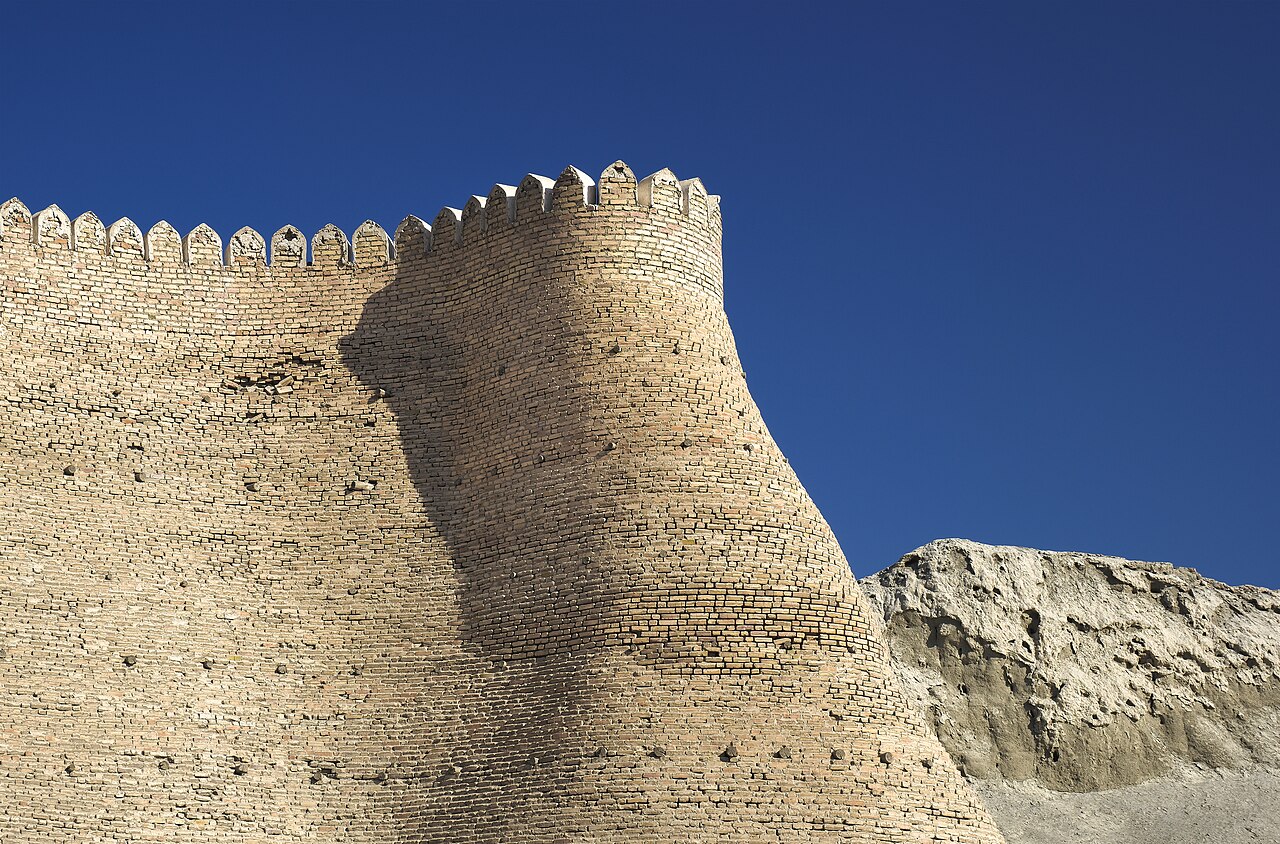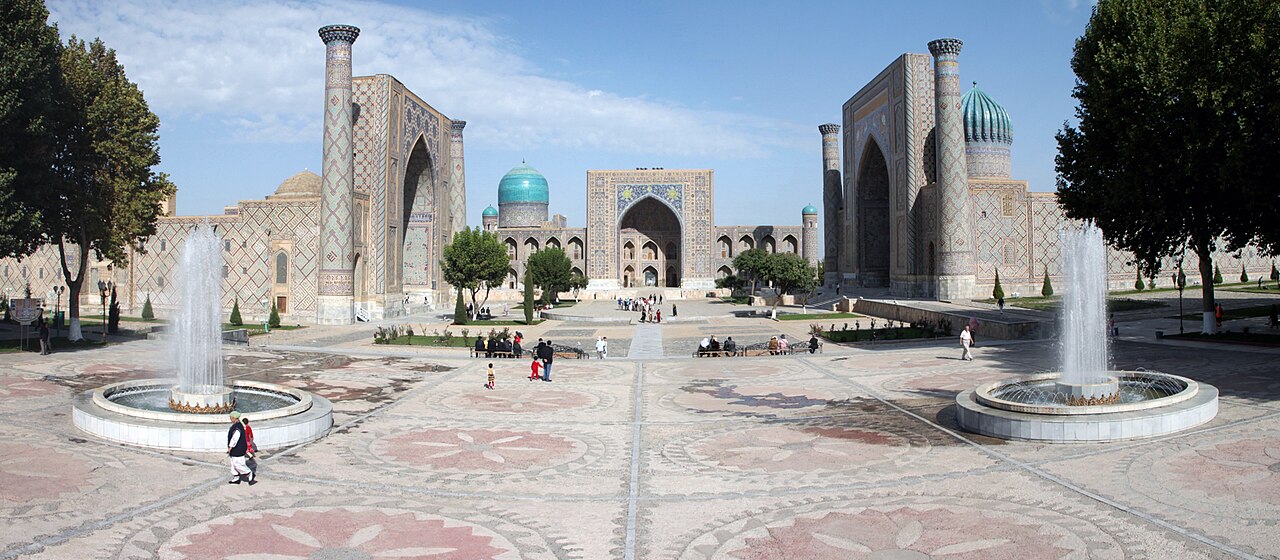
Bibi-Khanym Mosque was Timur's grandest building project, begun around 1399 after his return from India and intended as the largest mosque in the Islamic world. Its scale was extraordinary: a vast courtyard, a monumental entrance portal and a great turquoise dome. Construction was rushed, and the structure began to deteriorate soon after, with sections collapsing over the following centuries. It was left a magnificent ruin until partial restoration in the twentieth century and later work stabilised the portal, the minarets and the main dome. Today it dominates the skyline of the old town, and the courtyard, with a huge marble Quran stand in the middle, is a pleasing place to sit. Across the road lies Siyob Bazaar, Samarkand's central market and a fine counterpoint to the monuments. Stalls sell round Samarkand bread stamped with patterns, mountains of dried apricots, raisins and walnuts, spices, sweets and fresh produce, and the hum is cheerful and authentic. It is open most days of the week and free to enter, though a closing day is typical, so check before building a plan around it. Entry to the mosque is ticketed at modest cost. Both are part of the Samarkand UNESCO listing, so the UNESCO page is the best official reference.
The history is dramatic. Legend says the mosque was named for Timur's wife, Bibi-Khanym, and that its architect fell in love with her and delivered a kiss that left a mark, but historians doubt the story; it is more reliable to say that Timur's craftsmen worked under great time pressure and that the walls were too tall for the brick and mortar of the day. The mosque was damaged by earthquakes and decay, and reconstruction began in earnest in the twentieth century. The interior still looks unfinished in places, which is part of its character.
Working the visit: arrive in the morning, walk the courtyard and look at the portal from different angles, then head across the road to Siyob Bazaar before the heat of the day. Buy bread, dried fruit and nuts for picnics or gifts, but compare prices and politely bargain where stalls do not mark them. Do not buy fruit you cannot wash or peel in hot weather unless you trust the vendor. Photography is welcome, but always ask before photographing people at stalls.
When to go and what to avoid: the market is busiest and best in the morning and tends to close in the early evening. Check hours before you go, as bazaars in Uzbekistan often rest one day a week. Winter hours for the mosque are shorter than in summer, so check current posting. Both stops are free of crowds compared with the Registan, and together they make an easy two-hour break between the major ticketed sights. A taxi from your hotel is inexpensive, and the walk from the Registan is possible but long in summer heat.
What to expect
The experience
A self-guided visit to the mosque courtyard and portal, followed by a wander through the stalls of Siyob Bazaar across the road.
Best time
Morning, when the bazaar is at its liveliest and the heat has not built up.
How long
About two hours for the mosque and a relaxed market stroll.
Tips
Check the market's weekly closing day, bring small notes for snacks and ask before photographing vendors.
Quick picks
- Best for
- Travellers who want a break from ticketed monuments and a taste of daily life in Samarkand.
- Families
- The market is colourful and full of snacks to try, and the open courtyard gives children room to move.
- Couples
- A relaxed morning of bread, fruit and ruined grandeur, followed by tea nearby.
- Pair with
- Gur-e-Amir and the Registan on the same day circuit.
- Time needed
- Two hours on foot, a little longer if you linger over tea and snacks.
Good questions
Why is Bibi-Khanym partly ruined?+
It was built quickly on a colossal scale and began to crumble soon after completion, then suffered from earthquakes and neglect. Partial restoration has stabilised the portal, minarets and dome.
Is Siyob Bazaar free to enter?+
Yes, you can walk in freely and pay only for what you buy. It usually closes one day a week, so confirm before you plan around it.
What should I buy at the bazaar?+
Samarkand bread, dried apricots, raisins, nuts and spices are the classics. Look at stalls first and compare prices before buying.
Can I visit both on foot?+
Yes, they sit across the road from each other, so you can walk between them in a few minutes. Getting there from the Registan is better by short taxi ride in hot weather.
Is the mosque active?+
It is mainly a heritage monument rather than a regular place of worship. Dress modestly all the same.