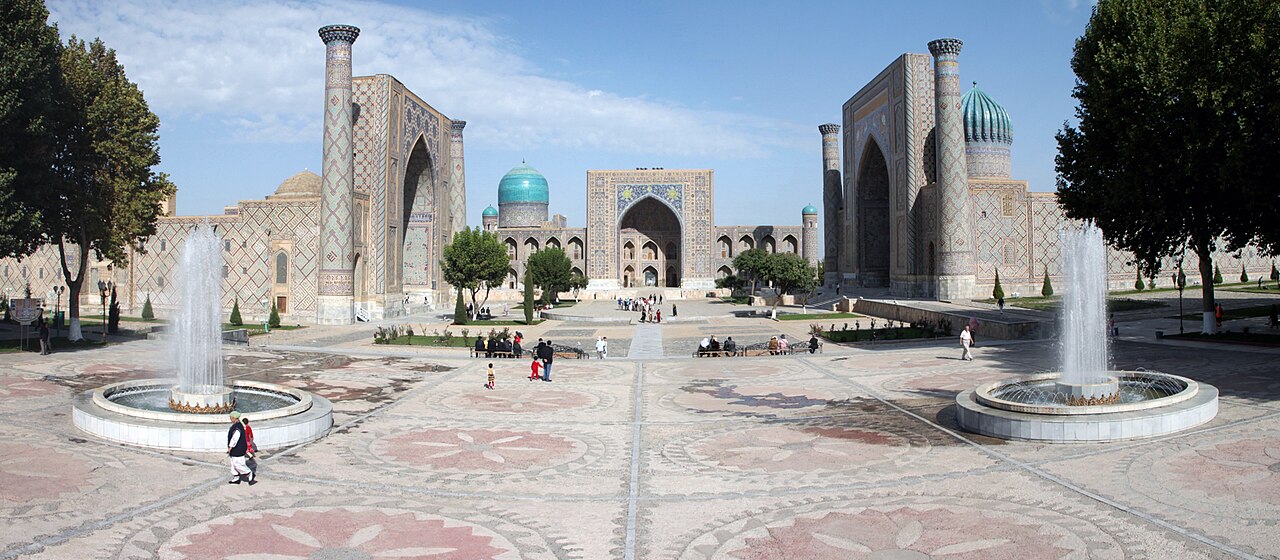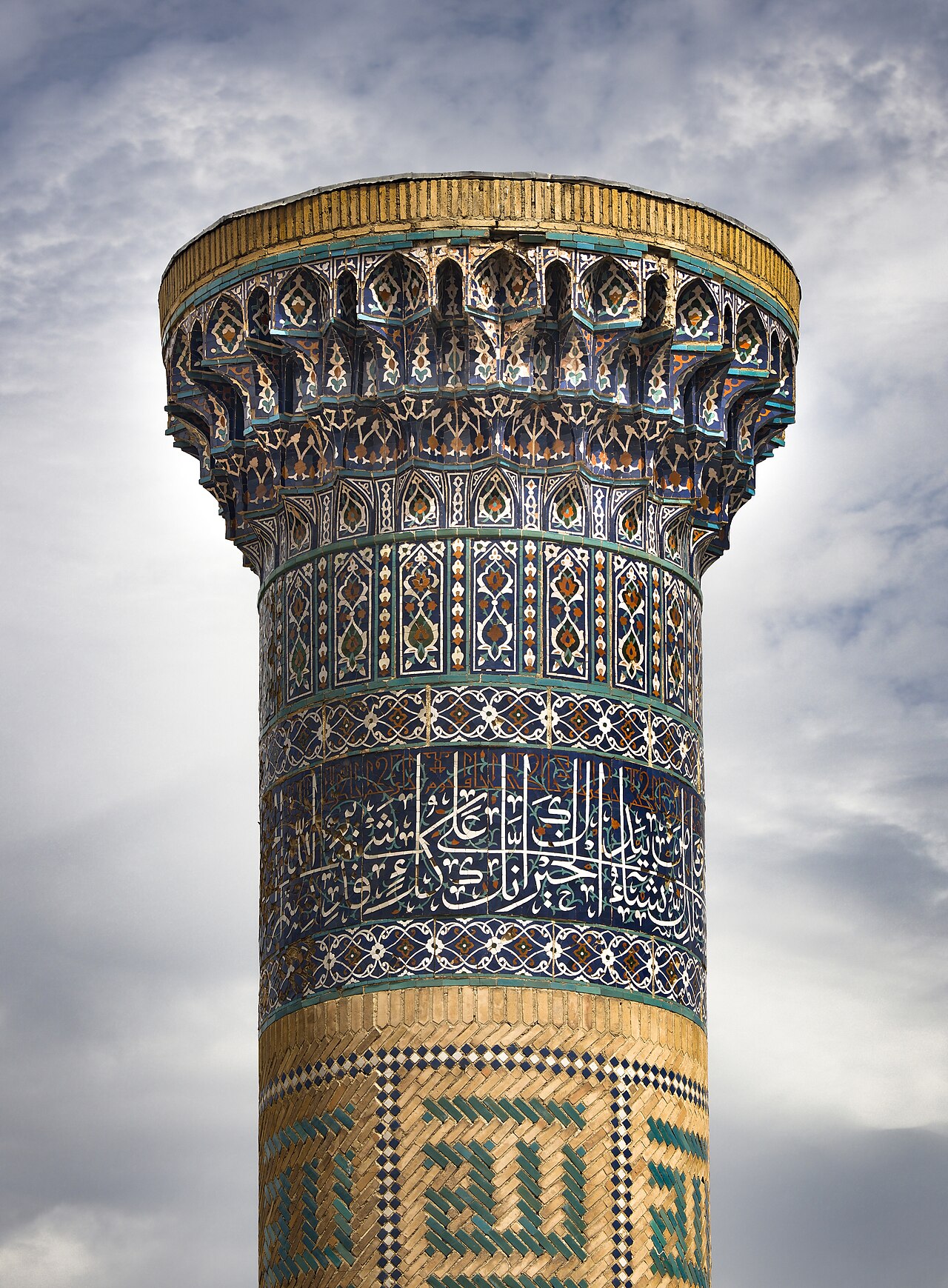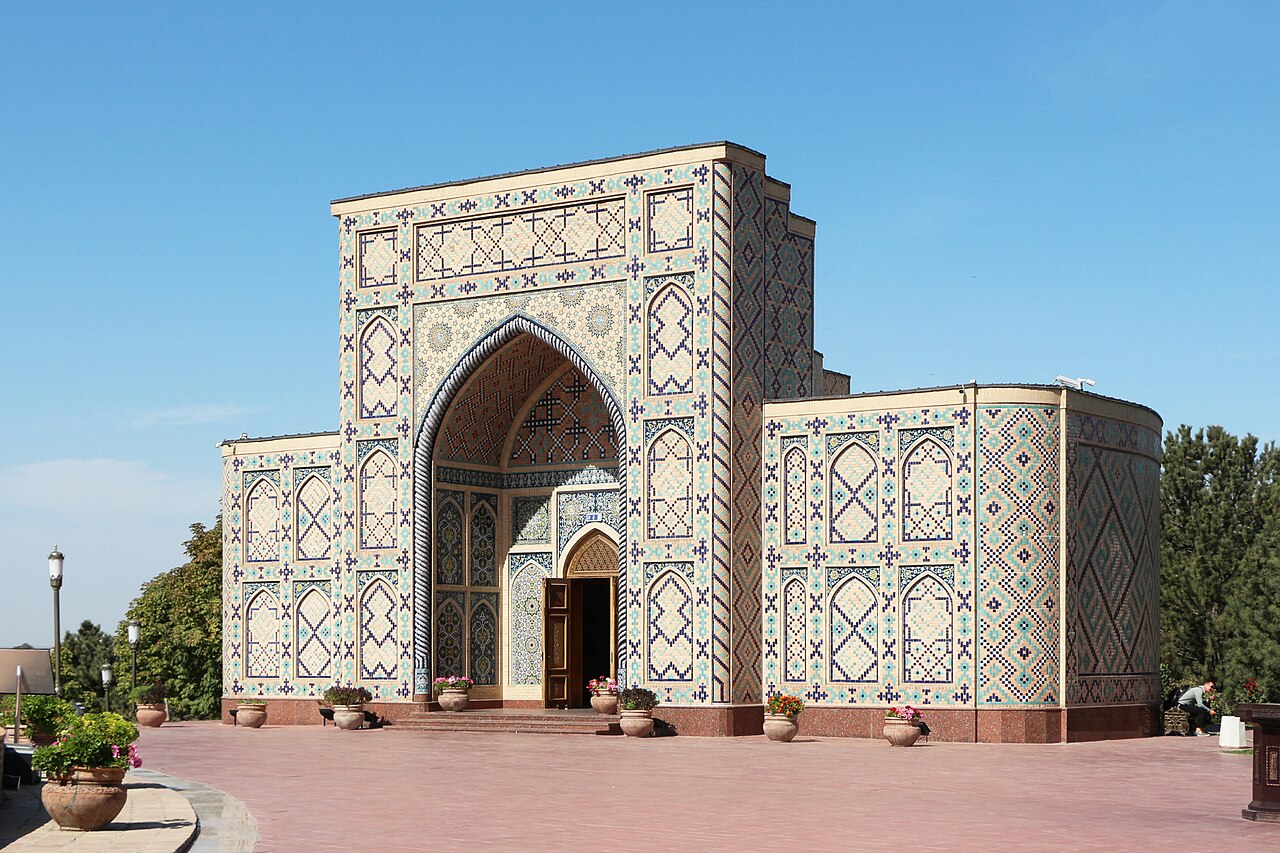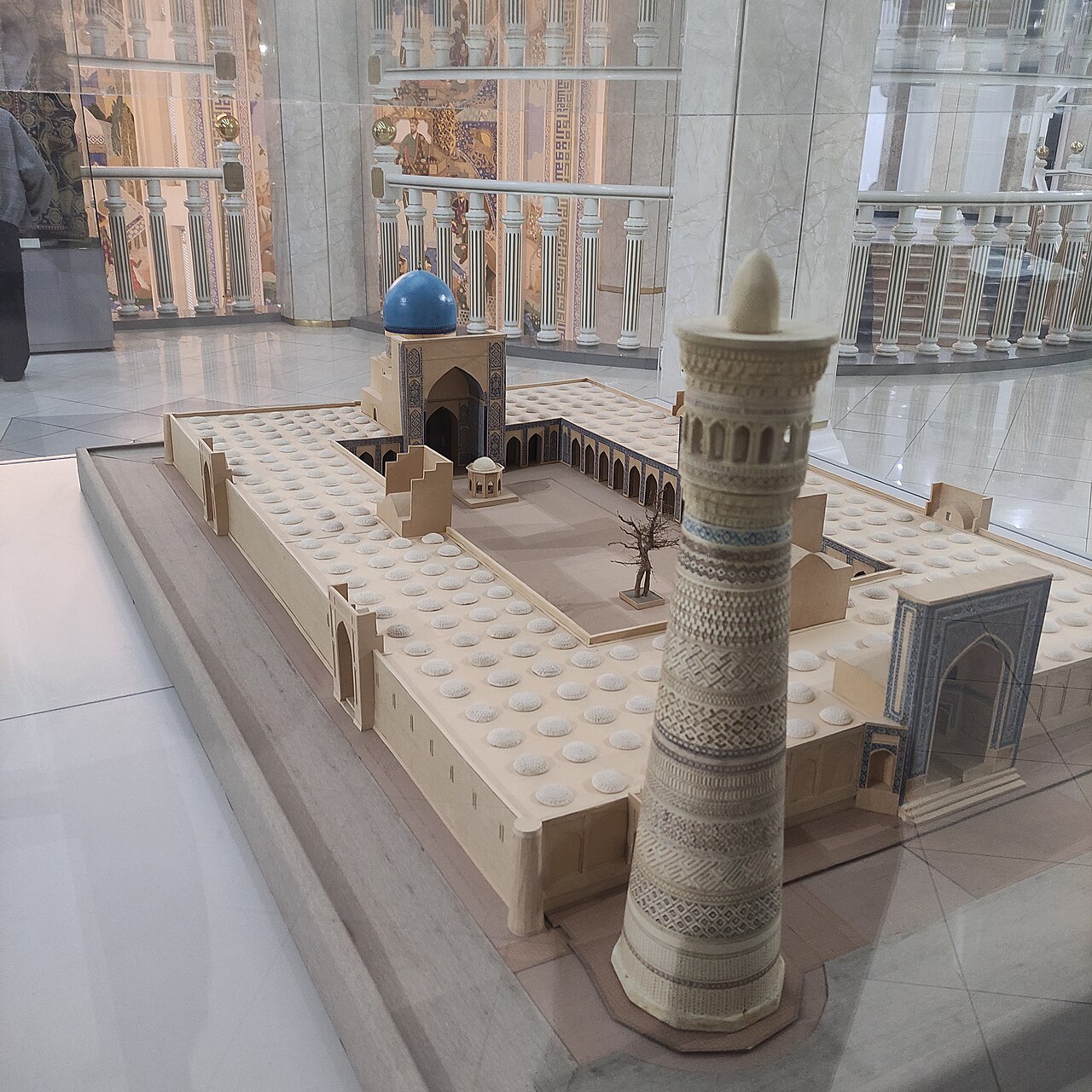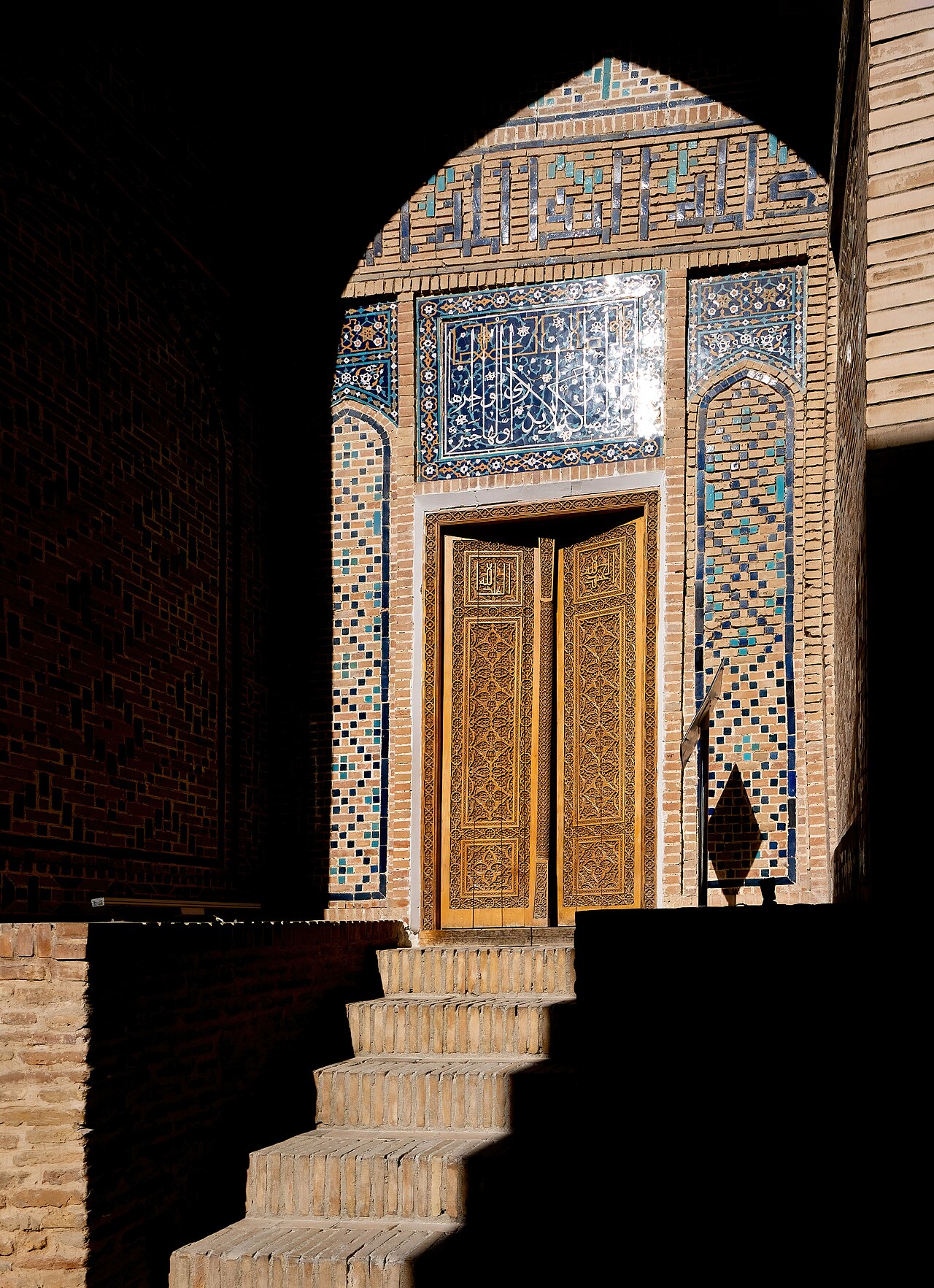
Shah-i-Zinda, the Tomb of the Living King, is less a single building than a street of tombs. A stairway leads up a hillside past a double row of mausoleums built between the eleventh and the fifteenth centuries, and each doorway frames a different tile treatment: carved terracotta, mosaic faience, interlocking stars, deep cobalt and turquoise. The oldest part of the complex is traditionally associated with Qusam ibn Abbas, a cousin of the Prophet Muhammad said to have brought Islam to this region, and it has been a place of pilgrimage for centuries. Many later tombs belong to members of Timur's family and court, including women of the royal house, and the details of their decoration reward close study. Walking the lane in the cool of the morning, with light falling through gaps in the facades and local families coming to pray, is among the most evocative experiences in Samarkand. It is a working religious site as well as a heritage monument, so modest dress and quiet behaviour are expected. A guided visit is worthwhile because the layout is confusing without explanation and the guide can point out which tombs are earlier and which later, and why the colours change. The Shah-i-Zinda sits on a hill beside the old Afrasiab settlement and is a short drive from the Registan.
The history helps you read the street. The complex grew over centuries around the shrine of Qusam ibn Abbas, with the greatest building burst in the time of Timur and his successors in the fourteenth and fifteenth centuries. Many of the best-known tombs were built for Timur's relatives and commanders, and craftsmen competed to produce ever more elaborate surfaces. Later restorations in the twentieth and twenty-first centuries repaired and in places rebuilt the facades, so some tiles are original and others new. Guides will show you the difference.
Working the visit: you climb a staircase and then walk through a covered, narrow passage of tombs, so the experience is compact and best done slowly. Allow about an hour. Early morning is quiet, and the low sun brings out the relief in the carved terracotta. You can usually look inside several mausoleums, where painted ceilings and smaller tiled rooms reward the effort. Photography is allowed in the open areas, but be discreet near people who are praying and do not stop in the middle of the narrow lane.
When to go and what to avoid: Shah-i-Zinda is open daily, and the stairs are steady but not steep. Dress respectfully with covered shoulders and knees, and women may want a scarf for the shrine areas. Avoid the hottest part of summer afternoons, when the stone lane holds heat. Many visitors combine it with the Afrasiab museum on the next hill, the Registan and Gur-e-Amir in a single city circuit, and a good private or small-group tour will connect all of them with a driver so that you are not stuck arranging taxis between each stop.
What to expect
The experience
A walk up a stairway and along a narrow lane of mausoleums with tiled facades, ideally as part of a guided private city tour with transport.
Best time
Early morning, when the lane is quiet and the low sun picks out the relief in the carved tile.
How long
About an hour at a relaxed pace, a little longer with a guide.
Tips
Dress modestly, keep voices low near pilgrims and look inside the open tombs for painted ceilings.
Quick picks
- Best for
- Anyone who loves tilework and atmosphere; many travellers rate it above the Registan for mood.
- Families
- Short and visual, but a working shrine, so children need to be quiet and respectful.
- Couples
- The play of light in the narrow lane is romantic and photogenic, especially on a calm morning.
- Pair with
- The Registan and Gur-e-Amir, with Bibi-Khanym and Siyob Bazaar for lunch.
- Time needed
- One hour on site, or half a day inside a wider Samarkand city tour.
Good questions
What is Shah-i-Zinda?+
It is a necropolis of mausoleums built from the eleventh to the fifteenth centuries around a shrine linked to a cousin of the Prophet Muhammad. Many of the tombs belong to Timur's relatives and court.
Is it a religious site?+
Yes, it is an active place of pilgrimage as well as a monument. Dress modestly and keep your voice low.
Do I need a guide?+
A guide is helpful because the layout is confusing and the dates and owners of the tombs are hard to know alone. A city tour with transport also saves time between stops.
How long does it take?+
About an hour is enough for a thorough visit. Allow longer if you want to stop at each tomb and take photographs.
Is it accessible?+
There is a staircase to the main lane and uneven stone underfoot, so it is demanding for wheelchair users and those with limited mobility. Ask a guide about alternative approaches.