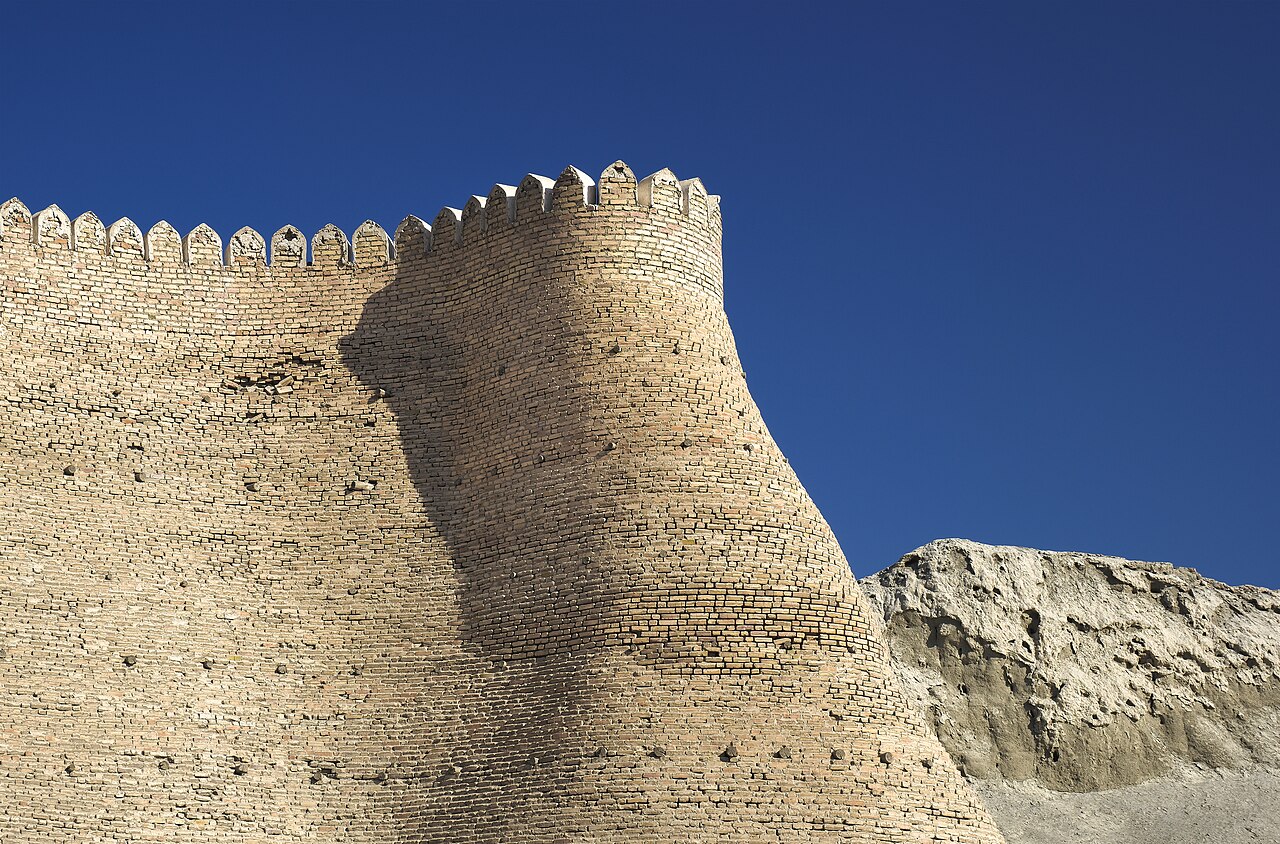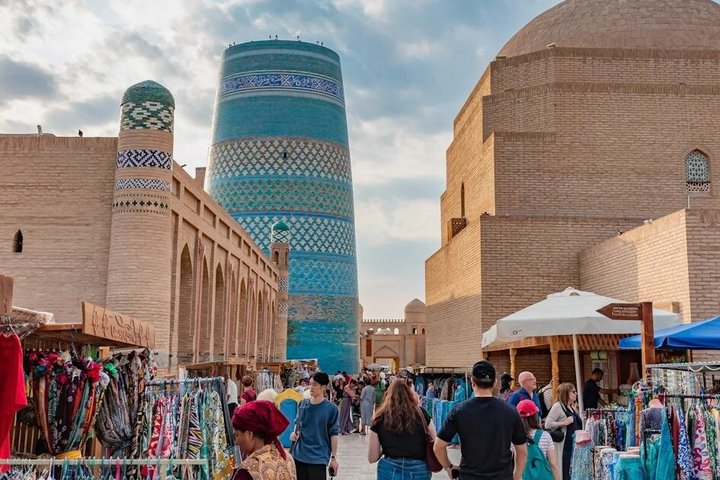
Khiva is the Uzbek city many visitors wish they had planned for. The old walled core, called Ichan Kala, is a compact fortress town inside mud-brick walls, packed with madrasas, mosques, palaces and minarets in a style distinct from Samarkand and Bukhara. The most famous landmark is the short, fat Kalta Minor minaret, glazed in turquoise and left unfinished, while the Islam Khoja minaret rises high above the rooftops and offers views over the town from its top. The old town has been well preserved and restored, so walking its lanes feels like stepping into a stage set, with carved wooden pillars in the Juma Mosque, painted ceilings in the Tash Khauli palace and city walls you can climb. The place is relaxed and walkable, and quieter in the evening when day visitors leave. The day trip from Bukhara is a long haul by road across the desert, so it suits travellers who accept a very full day for a first look. Khiva is much better with an overnight, and a night inside the walls is one of the most atmospheric things you can do in Uzbekistan.
Why Khiva is different
The old town was the capital of the Khanate of Khiva, a small but ambitious Central Asian state, and its heart was kept largely intact. Because the walled town is small, you can see the major monuments in a day on foot, and many of the buildings are open as museums or craft workshops, with stalls selling carpets, silk and hats. The Kalta Minor minaret is the iconic sight, but the Juma Mosque, with its forest of carved wooden columns, and the Tash Khauli palace, with its rich painted interiors, are equally worth your time.
Working the visit
A day trip involves a very early start and a long drive each way, often six hours or more in total, so check the transport and timing of the tour you choose. A guide helps by weaving through the monuments efficiently. Tickets to the old town and its sights are usually bought on site or arranged by the tour, and a combined ticket often exists, so ask your guide how it works.
Wear comfortable shoes, carry water and a hat, and expect little shade in summer. Climbing the Islam Khoja minaret is a highlight if the stairs suit you, though they are steep and narrow.
When to go and what to avoid: spring and autumn are the best seasons, since Khiva is very hot in summer and cold in winter. If you can, stay a night inside the walls to see the town at dusk and early morning, when the day trippers have gone and the light is gold on the brick.
Avoid the trip if you have only a short stay in Uzbekistan and want to see Samarkand and Bukhara properly first; a rushed Khiva day is tiring and can detract from them. For travellers with more time, Khiva is the ideal extension to the classic route.
What to expect
The experience
A long guided day from Bukhara to Khiva, with a walk through the walled Ichan Kala and its main monuments.
Best time
Spring and autumn; summer is very hot.
How long
A very full day, with six hours or more on the road.
Tips
Start early, wear comfortable shoes, carry water and ask how tickets for the old town work.
Quick picks
- Best for
- Travellers who want a taste of Khiva without changing their base.
- Families
- Possible for older children, but the road time is long.
- Couples
- Atmospheric, though better with a night inside the walls.
- Pair with
- A Bukhara stay, or a longer Khiva overnight.
- Time needed
- A full day, or two days with an overnight.
Good questions
What is Ichan Kala?+
The walled old town of Khiva, a preserved fortress town of madrasas, mosques, palaces and minarets.
Is a day trip from Bukhara realistic?+
It is possible but long, with several hours of driving each way. An overnight in Khiva is far more relaxed.
What is the Kalta Minor?+
A short, wide minaret covered in turquoise tile, left unfinished, and the best-known image of Khiva.
When should I go?+
Spring and autumn are best. Summers are very hot and winters are cold.
How are tickets handled?+
Ask your guide or operator. A combined ticket for the old town is common, and tours often arrange entry.