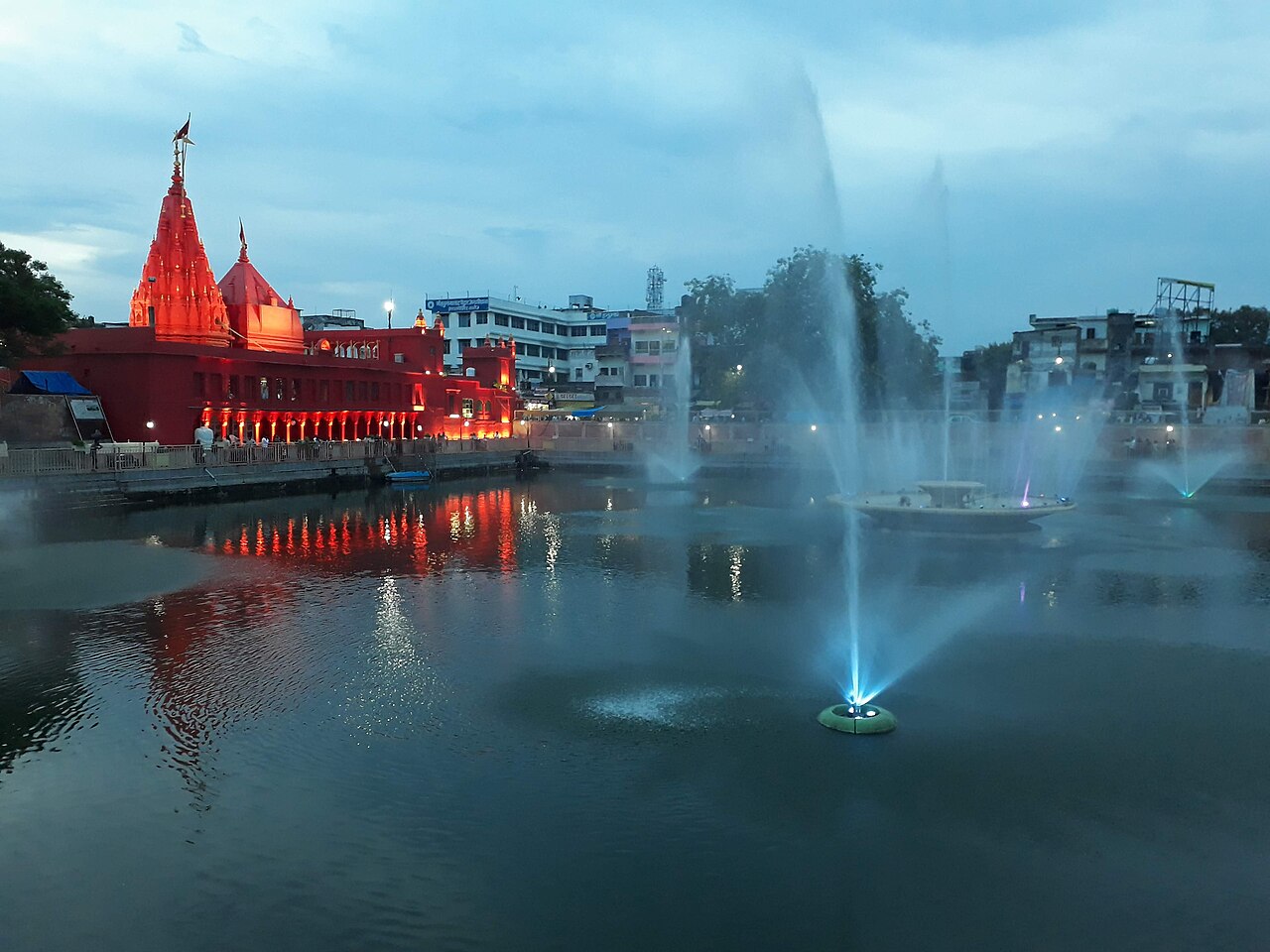
The Durga Temple, often called Durga Kund Mandir, stands on the edge of a large rectangular tank in the southern part of the city, and it is among the most recognisable temples in Varanasi because of its deep red walls. According to the Incredible India tourism page, it was built in the eighteenth century by Rani Bhabani, a Bengali queen who also funded many other works in the city. Devotees regard Durga as the guardian of Varanasi, and tradition holds that her image here was not made by human hands but appeared on its own. The architecture is in the North Indian style, with carved columns and a tall tiered tower said to represent the five elements, and the red colour is associated with the goddess. Shrines inside honour other goddesses including Lakshmi, Saraswati and Kali. The tank, called Durga Kund, gives the temple a setting unlike the riverfront shrines, and it is the stage for a ceremonial recreation of Lord Vishnu reclining on a serpent during the festival of Nag Panchami. The temple is also nicknamed the monkey temple because of the many monkeys that live around it, so visitors should expect them. The tourism page lists morning and evening opening periods with a break in the afternoon, so plan around that. The setting around the tank is lively, with flower sellers, sweet stalls and families arriving to offer red hibiscus and sweets, so the temple feels very much part of the neighbourhood rather than set apart from it. Visiting on a weekday morning gives the calmest impression of the courtyard and its carved details.
Why include it? Because it adds a different kind of Varanasi sight: not a ghat, not the city's best-known shrine, but a working goddess temple with a distinct architectural look and a sense of local ritual. The red stone, the tank and the shikhara are photogenic, and the area comes alive during Navratri, when Durga worship draws large crowds across the city and the temple is decorated heavily. At other times it is quieter and easy to visit without a long queue.
How to do it
Go in the morning or the late afternoon, outside the midday closure, and allow about an hour. Remove shoes before the temple area, dress modestly and carry as little as possible, because bags and phones may be restricted and the monkeys will go for loose food, sunglasses and plastic bags.
Offerings are sold at stalls outside; buy only what you intend to give, and politely decline anyone who insists on a package. The temple pairs well with Tulsi Manas Temple, which is a short walk, and with Sankat Mochan Temple, so many visitors do all three on one morning with a rickshaw or taxi.
Who it suits
Anyone interested in the goddess traditions of India, photographers, and visitors who want a break from the lanes and the ghats. It is not a huge monument, so it works best as part of a southern-city loop rather than a stand-alone trip. Entry is free and visitors should follow the signs and the instructions of the staff. If you visit around Navratri, expect large crowds and arrive early, and if crowds worry you, choose a quieter week and enjoy the courtyard and the tank at a slower pace.
What to expect
The experience
A free visit to a red stone goddess temple beside a rectangular tank, with carved columns, several shrines and many monkeys.
Best time
Morning or late afternoon, outside the midday closure. Navratri brings the biggest crowds and the richest atmosphere.
How long
About an hour at a relaxed pace.
Tips
Keep food, sunglasses and bags secured around the monkeys, remove shoes, dress modestly and buy offerings only if you want them.
Quick picks
- Best for
- Visitors interested in goddess worship, temple architecture and a quieter stop away from the riverfront.
- Families
- Children often love the monkeys, but hold small hands and keep snacks hidden.
- Couples
- A colourful, photogenic stop that pairs well with a slow southern-city morning.
- Pair with
- Tulsi Manas Temple a short walk away, then Sankat Mochan Temple.
- Time needed
- About an hour, or half a morning with the neighbouring temples.
Good questions
Who built the Durga Temple?+
The Incredible India tourism page says it was built in the eighteenth century by Rani Bhabani, a Bengali queen.
Why is it called the monkey temple?+
Many monkeys live around the temple and the tank, which has given it the nickname. Keep food and loose items secured.
What are the visiting hours?+
The tourism page lists a morning period and an evening period with a break in the afternoon, so avoid the middle of the day.
When is the best time to see it?+
Navratri is the most atmospheric but also the most crowded time. For a quieter visit, choose a regular morning.
Is there an entry fee?+
Temples are normally free to enter, though the tourism page does not state a fee. Offerings from the stalls are optional.