Vilnius is a fine base for day trips because Lithuania is small, roads are good and the most rewarding excursions sit anywhere from twenty minutes to three hours from Cathedral Square. The country’s history is spread across its landscape rather than concentrated in the capital, so one or two days outside the city add depth to a visit. Here is how the main options compare, and how to choose between them.
Trakai: the classic first excursion
The red-brick island castle on Lake Galvė is the postcard image of Lithuania and the easiest trip from Vilnius, about half an hour away by train, bus or car. The castle museum takes an hour or two, and the town beyond has a Karaim heritage that is easy to taste: the Karaim community, a small Turkic-speaking people who settled here centuries ago, are known for kibinai, baked pastries filled with meat. Walk the lakeshore, take a boat if the weather suits, and allow half a day. Be aware that the castle museum keeps shorter hours in winter and closes on certain weekdays, so check before you set out.
Kernavė: the quiet UNESCO site
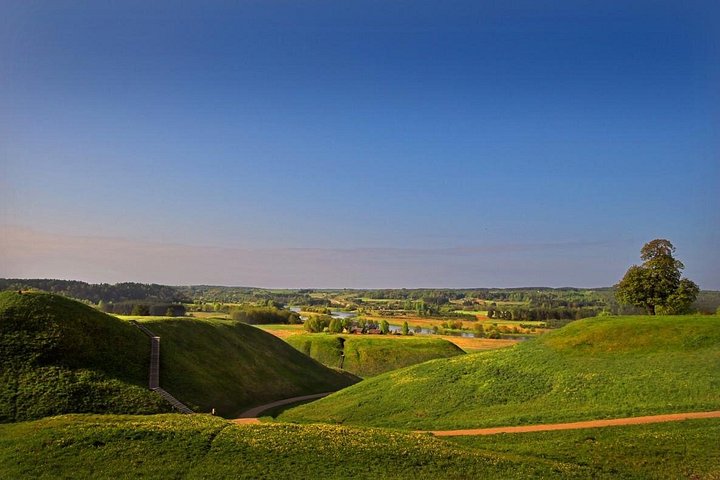
About thirty-five kilometres from Vilnius, Kernavė is a valley of five grassy hillforts beside the Neris, where a medieval town and early centre of the Lithuanian state once stood. It was inscribed on the World Heritage List in 2004. There is little to see in the way of ruins, because the town was burned in 1390 and the archaeology lies underground, but the setting is lovely, the climbs are short and a museum shows the finds. It suits walkers and history lovers, and works best from late spring to early autumn. A guided day tour can combine it with Paneriai and Trakai.
Kaunas: a different city
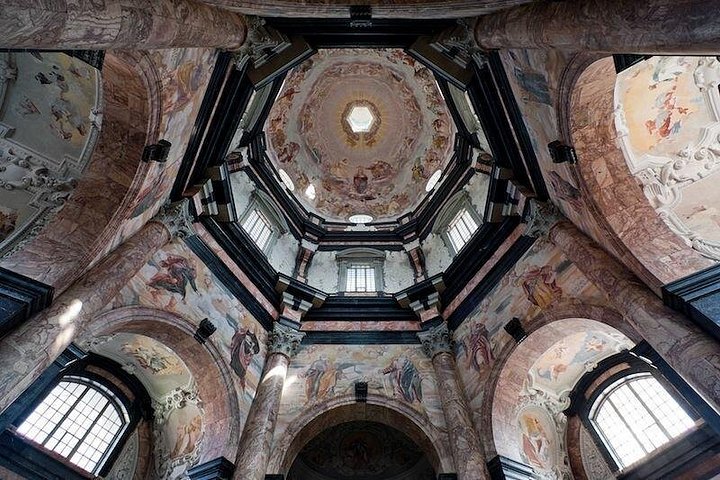
Roughly one hundred kilometres west, Kaunas was Lithuania’s temporary capital between the wars and has a distinctive stock of modernist architecture, a long pedestrian avenue and a lively student feel. A full-day tour can add the Open-Air Museum at Rumšiškės, a very large collection of farmsteads and wooden buildings from across the country, and the Baroque monastery at Pažaislis. Trains and buses connect the two cities, but a guided trip makes the countryside stops easier. Allow a full day and an early start.
Europos Parkas: art in the forest
The sculpture park that marks the geographical centre of Europe lies a short drive north of Vilnius, in a woodland setting, and you walk among large modern works on forest paths. It takes two or three hours, suits families and is easy to combine with Trakai if you have a car or a driver. Wear shoes for gravel and mud, and take a layer in spring and autumn. In winter, check which areas are open, since snow changes how much you can see.
The Hill of Crosses: the long pilgrimage
Near Šiauliai in the north of the country, the Hill of Crosses is covered in tens of thousands of crosses left by pilgrims, a place of faith and quiet resistance under Soviet rule. It is the longest of the common day trips, around three hours each way by road, so the guided roundtrip, which leaves early and returns in the evening, is the practical choice. It is one of the most memorable sights in Lithuania, and it works at any time of year, though winter roads and short days make a long outing more tiring.
Paneriai: remembrance
On the edge of the city, the forest memorial at Paneriai marks the site where tens of thousands of people, most of them Jews from Vilnius, were killed during the German occupation. It is a sober place, quiet and respectful, and many guided day tours include it with Trakai or Kernavė. Allow time to read the memorials and keep the visit unhurried.
A very different day: the balloon
If you prefer something special over sightseeing, a balloon flight over the Trakai lakes and forests, weather permitting, is the signature romantic experience of the region. It depends on the wind, so keep a spare day in your schedule.
Choosing and combining
For a first trip, choose Trakai. For history lovers with two days, add Kernavė, and for a richer picture of the country, Kaunas. For a pilgrimage and a long day out, the Hill of Crosses. Avoid stacking three long trips in a short stay, because road time adds up and Vilnius itself repays slow evenings.
Practical tips
Check opening days, because museums outside the capital often close on Mondays, and some also close on Tuesdays in winter. Daylight is short from November to February, so prefer shorter trips then. Carry some euros for small purchases and snacks, wear sturdy shoes, and bring a rain layer in any season. If you travel independently, trains and buses run from the stations beside the Old Town, and ride-hailing apps are inexpensive for short distances.