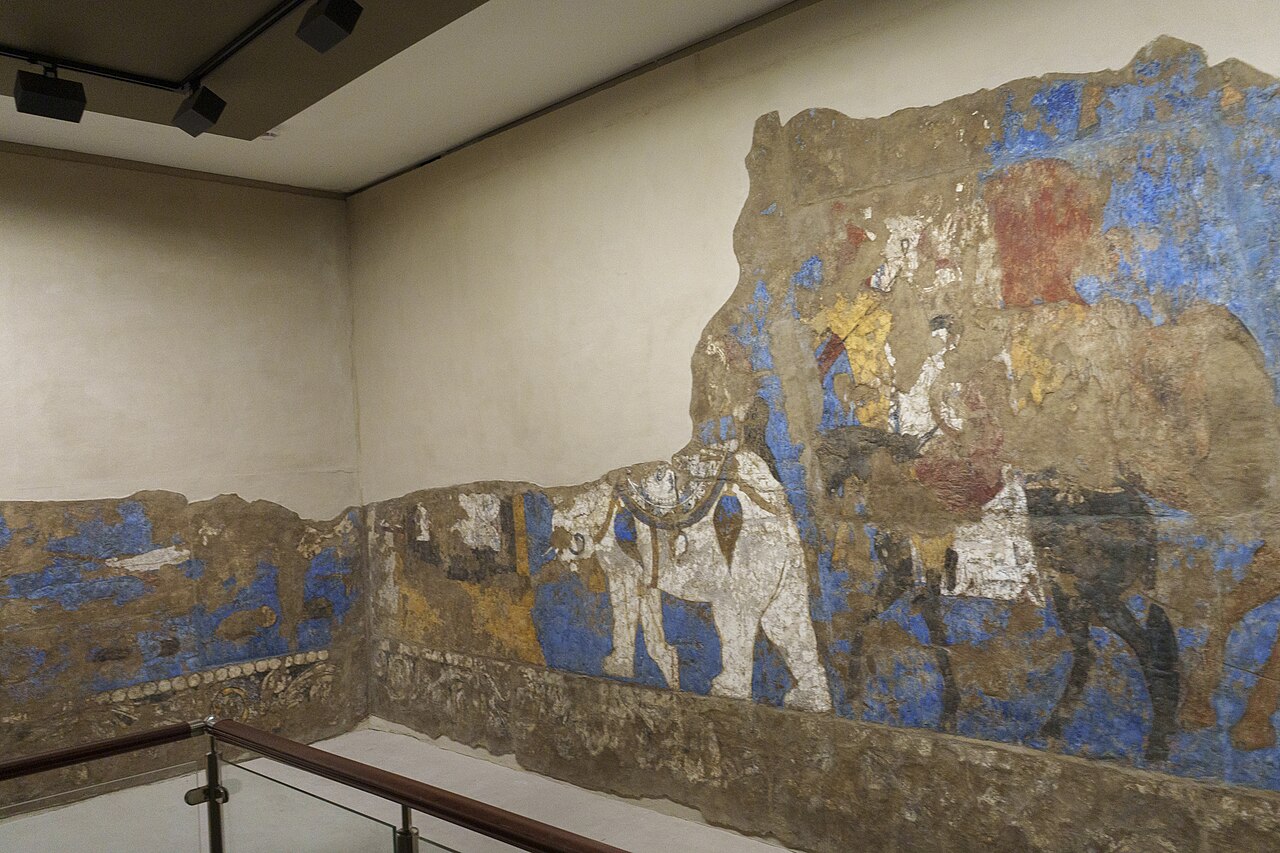
Most visitors come to Samarkand for Timur's blue domes, but the city is far older than the monuments. Afrasiab is the name of the ancient settlement on the hill north of the modern centre, the site of Samarkand before Genghis Khan's armies destroyed it in the thirteenth century. Grass-covered mounds and excavation trenches mark what was once a walled city, a major Sogdian trading centre on the Silk Road and later an Islamic capital. The museum on the site is the reason to go. It displays finds from the excavations, from ceramics, coins and tools to carved panels, and its most famous exhibit is a set of wall paintings from a seventh-century palace hall. The paintings show a procession of foreign envoys and local figures in elaborate dress, and they are among the best-known surviving examples of Sogdian art, giving a vivid picture of the cosmopolitan world that existed here centuries before Timur. Labels can be limited, so a guide or a bit of reading beforehand makes the visit far more rewarding. The site and museum are modest in scale, which makes them an easy addition to a morning at Shah-i-Zinda, whose lane of tombs lies at the foot of the same hill.
The story behind the site
Afrasiab was the heart of Sogdian Samarkand, known to Greek writers as Marakanda and conquered by Alexander the Great in the fourth century BC. Sogdian merchants were the great middlemen of the Silk Road, carrying silk, metals and ideas between China and the west, and their city was rich, cosmopolitan and well defended.
The Mongols destroyed it in 1220, and when Timur rebuilt Samarkand he built on the plain to the south, leaving the old hilltop to the archaeologists. That is why the monuments you see today are mostly Timurid, while the deeper history sits under the grass of Afrasiab.
Working the visit
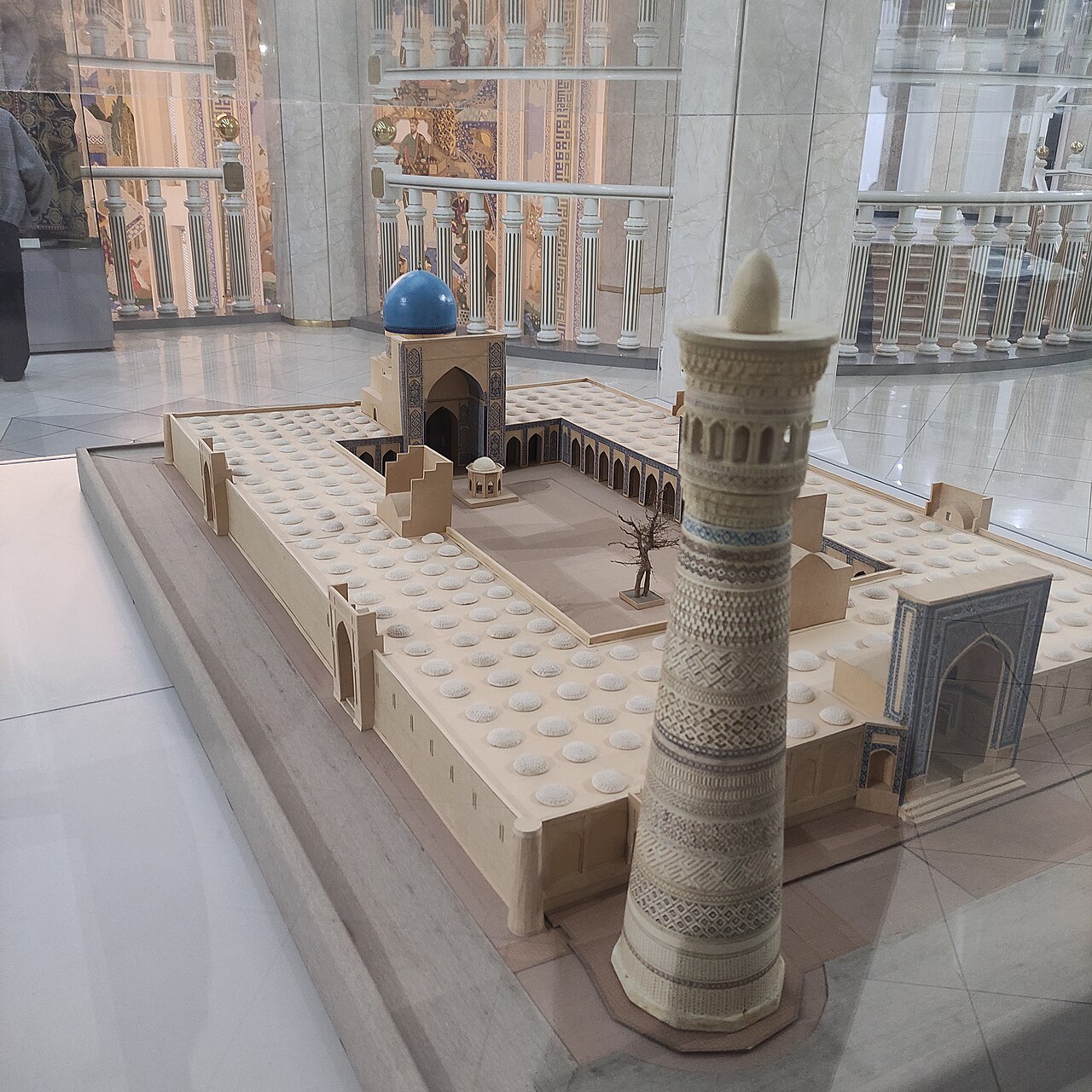
The museum itself takes about an hour, and the site can be walked in a little longer if you want to look at the excavated areas and the views over the city. A guide helps by translating the story of the wall paintings, which are subtle and easy to miss without explanation. Allow time to look carefully at the hall that displays the paintings and at the models and maps that show how the ancient city was laid out. Photography rules can change, so check at the entrance.
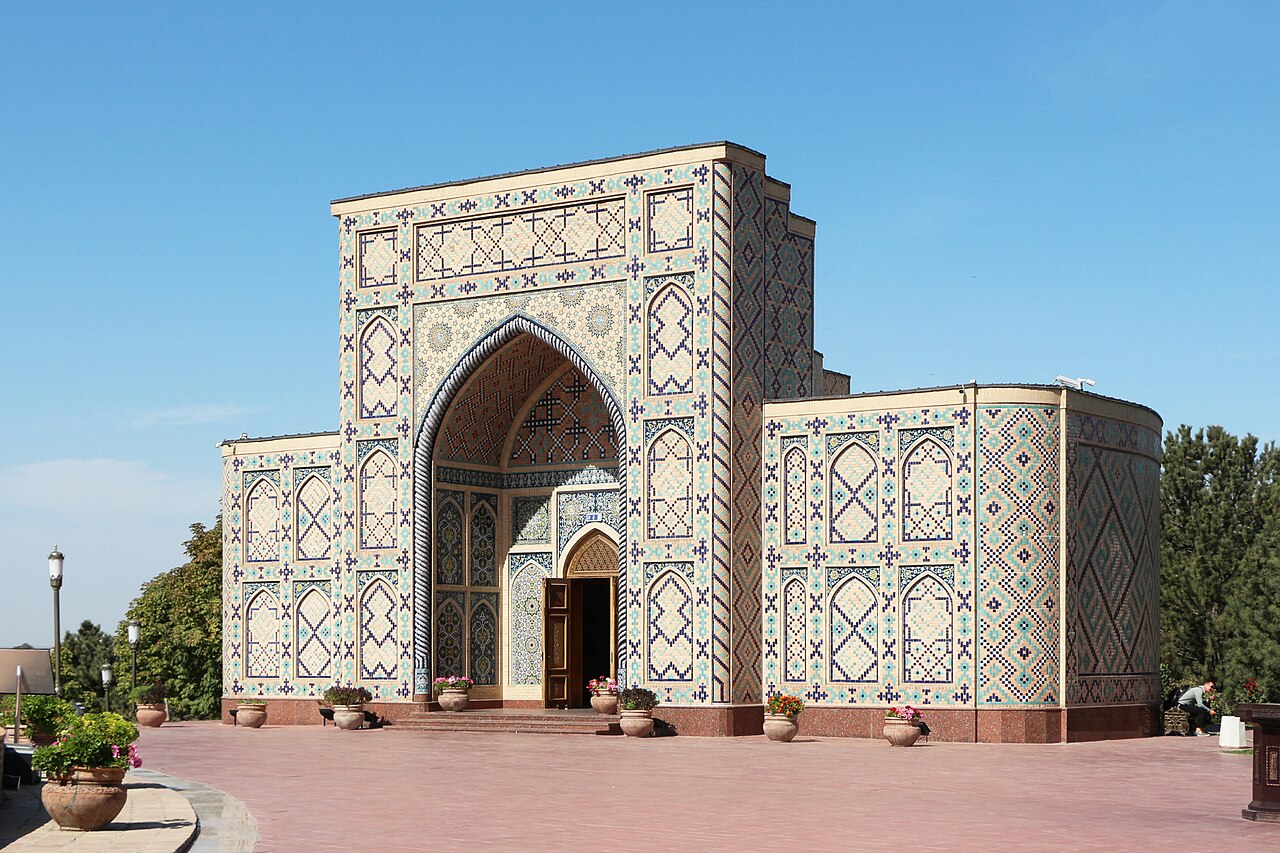
When to go and what to avoid: go in the morning, before the heat, and pair it with Shah-i-Zinda and the Ulugh Beg Observatory, which sit nearby, for a cohesive history morning. It is a good choice for history enthusiasts and curious families with older children, but it is not a spectacle like the Registan, so adjust your expectations. If you are short on time, put the Registan, Gur-e-Amir and Shah-i-Zinda first and add Afrasiab if you have the energy. Hours and ticket arrangements can change, so confirm locally on the day.
What to expect
The experience
A small museum of finds from the ancient city, centred on seventh-century Sogdian wall paintings, beside excavated mounds.
Best time
Morning, paired with Shah-i-Zinda at the foot of the same hill.
How long
About an hour for the museum, longer to walk the site.
Tips
Take a guide or read up on the Sogdian murals first, and confirm opening arrangements locally.
Quick picks
- Best for
- History lovers who want the Samarkand that existed before Timur.
- Families
- Best for older children who enjoy archaeology; younger ones may find it quiet.
- Couples
- A calm, thoughtful stop away from the main crowds.
- Pair with
- Shah-i-Zinda and the Ulugh Beg Observatory.
- Time needed
- One to two hours.
Good questions
What is Afrasiab?+
It is the site of ancient Samarkand on a hill north of the modern centre, destroyed by the Mongols in the thirteenth century and now partly excavated.
What is the museum famous for?+
Its seventh-century Sogdian wall paintings, which show a procession of envoys and are among the best-known surviving examples of Sogdian art.
Is it worth visiting if I only have a day in Samarkand?+
With one day, prioritise the Registan, Gur-e-Amir and Shah-i-Zinda. Add Afrasiab if you have time and an interest in ancient history.
Do I need a guide?+
A guide is not essential but helps, since the paintings and the layout of the ancient city need explaining.
How does it fit with other sights?+
It lies close to Shah-i-Zinda and the Ulugh Beg Observatory, so the three combine into a half-day.