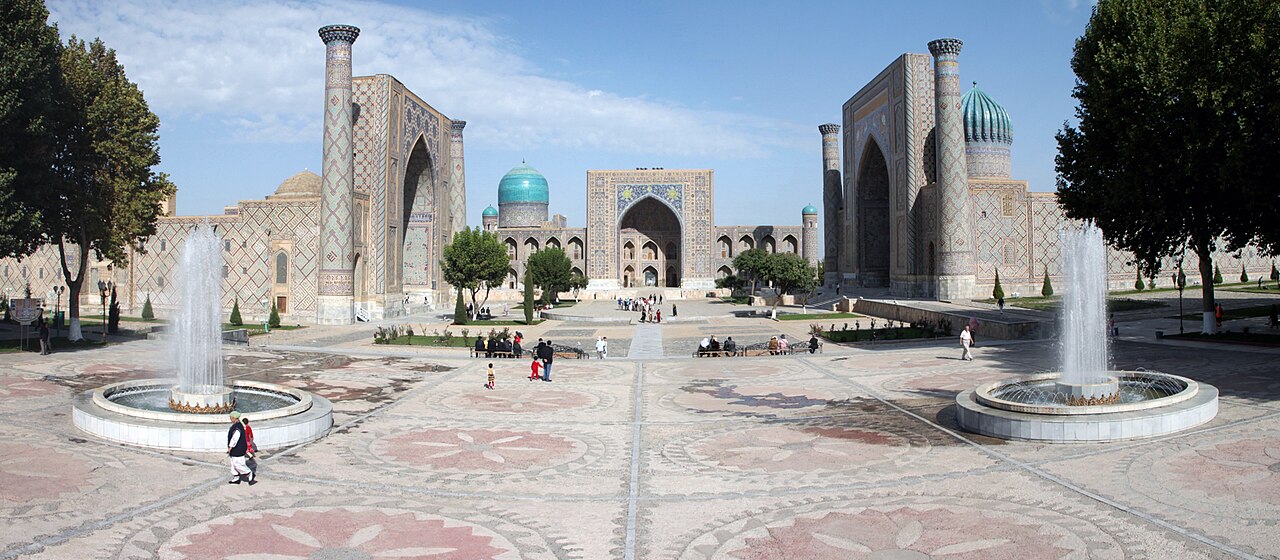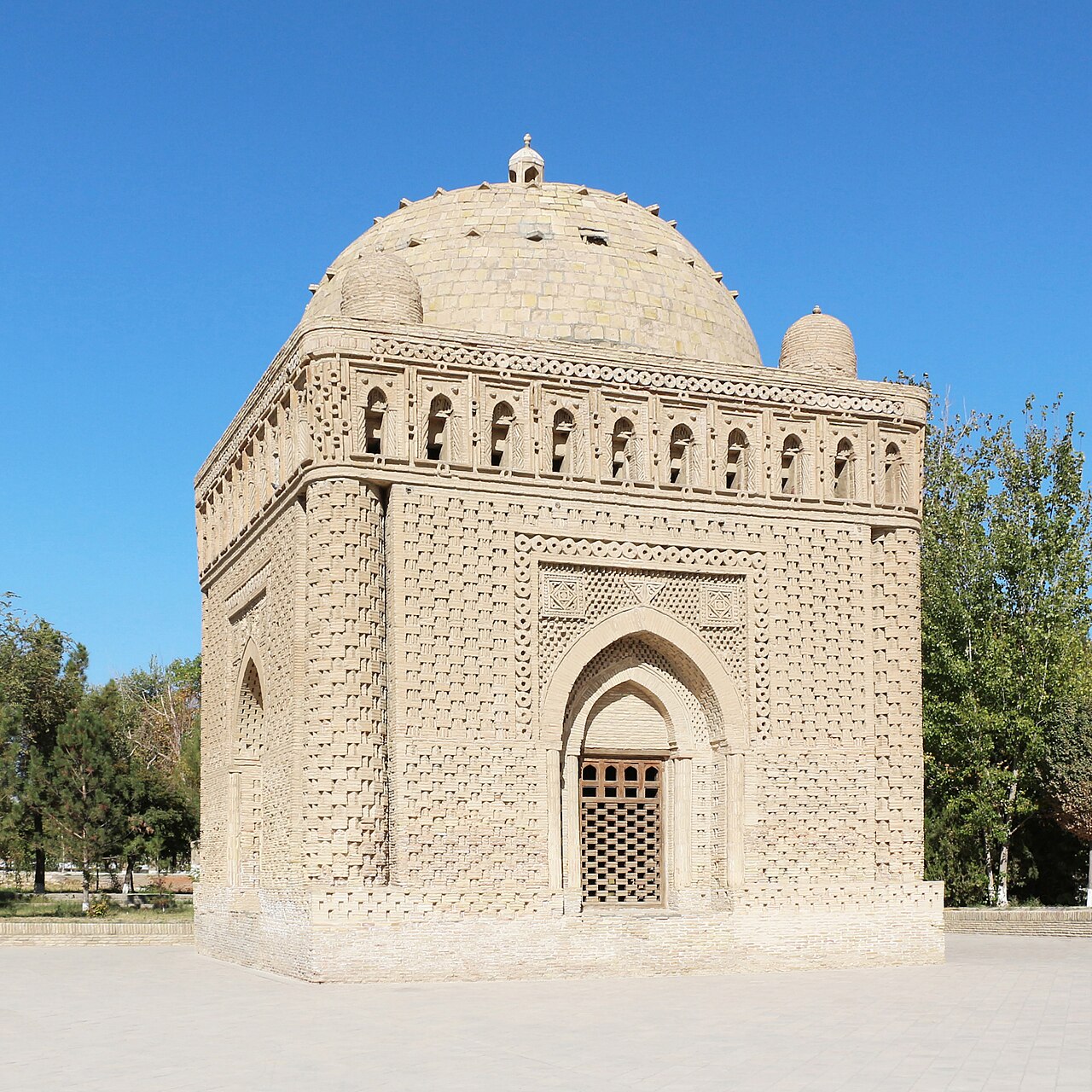
The Ismail Samani Mausoleum is one of the treasures of Bukhara, and it is smaller and plainer than the tilework of Samarkand. Built in the ninth and tenth centuries for the Samanid dynasty, it is a cube topped by a dome, and the entire building is made of baked brick laid in intricate patterns. The bricks form woven, basket-like designs and rows of beaded patterns that play with light, so the building seems to change texture from morning to evening. The effect is subtle but striking, and architectural historians prize the mausoleum as an early masterpiece and an important model for later tomb design in the region. The building stands in a shady park on the edge of the old town, and a local story holds that it escaped destruction by the Mongols because it had been buried under silt and was only uncovered in the twentieth century. Inside, the walls are plain and the space is quiet, and you can walk around the exterior to study the brickwork from every side. The park around it is a favourite spot for local families, and a short visit works well as a gentle contrast to the busy lanes of the old town.
The history and design
The Samanids ruled much of Central Asia and Persia from Bukhara, and their court was a centre of learning and art. The mausoleum is generally associated with Ismail Samani, the founder of the dynasty's golden age, and it is believed that other family members were buried here.
The design combines elements from earlier Persian traditions with Islamic ideas, and the pierced brick details show how craftsmen turned a simple material into decoration. The building is square with a central dome supported by corner arches, and the thick walls keep the interior cool.
Working the visit
Allow thirty to forty-five minutes. Walk around the building first, noticing how the patterns change from face to face and in different light, then step inside to see the dome from below. The park is a good place to sit afterwards, and you can reach it on foot from the old town in about twenty minutes or by a short taxi ride.
Because the site is small, there is little to see beyond the building itself, so combine it with other stops rather than making it your only destination. A guide adds a lot by explaining the symbolism and construction.
When to go and what to avoid: late afternoon light brings out the brick patterns beautifully and the park is pleasant then. Avoid the hottest midday hours in summer, when there is little shade on the approach. The mausoleum is a good fit for architecture lovers, photographers and anyone who likes quiet places, but families with young children may find it brief.
Opening hours and ticket arrangements can change, so confirm locally. The site also makes a fine contrast to the Kalyan Minaret and the Ark, whose scale and colour are more dramatic but whose craft is less subtle.
What to expect
The experience
A short visit to a small domed brick tomb in a park, with time to study the patterned brickwork outside and the quiet interior.
Best time
Late afternoon, when the light brings out the brick patterns.
How long
Thirty to forty-five minutes.
Tips
Walk around the exterior first, combine with other old-town stops and confirm opening arrangements locally.
Quick picks
- Best for
- Architecture lovers and photographers who appreciate subtle detail.
- Families
- Brief and quiet, so best for older children, with a park for a break.
- Couples
- A peaceful stop away from the busy lanes.
- Pair with
- The Ark of Bukhara and the Kalon complex.
- Time needed
- Under an hour.
Good questions
Why is the mausoleum important?+
It is among the oldest surviving Islamic monuments in Central Asia and an early masterpiece of brick architecture, built for the Samanid dynasty.
Why does it look so plain compared with Samarkand?+
It dates from before the great tiled buildings of Timur's time, and its decoration comes from patterned brickwork rather than glaze.
How long does a visit take?+
About thirty to forty-five minutes.
Is it close to the old town?+
It is on the edge of the old town and reachable on foot in about twenty minutes or by a short taxi ride.
When is the best light?+
Late afternoon, when the brick patterns stand out.