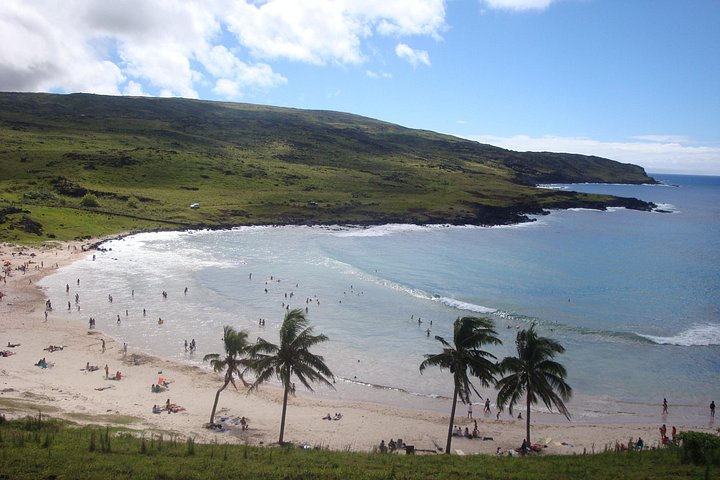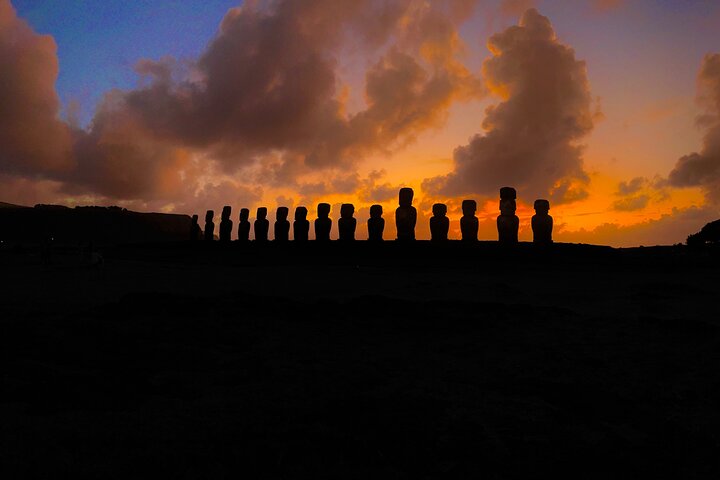
Easter Island is a place where history is written in stone, and a basic understanding of the story makes every site more meaningful. The Rapa Nui people are Polynesians who crossed vast stretches of the Pacific in double-hulled canoes and settled on one of the most isolated islands in the world. Tradition says that their founder, Hotu Matu'a, landed at Anakena with his family and followers, and that the island was divided among clans descended from them. Exactly when the first settlers arrived is still debated, and estimates vary, so treat any single date with caution.
What the moai are
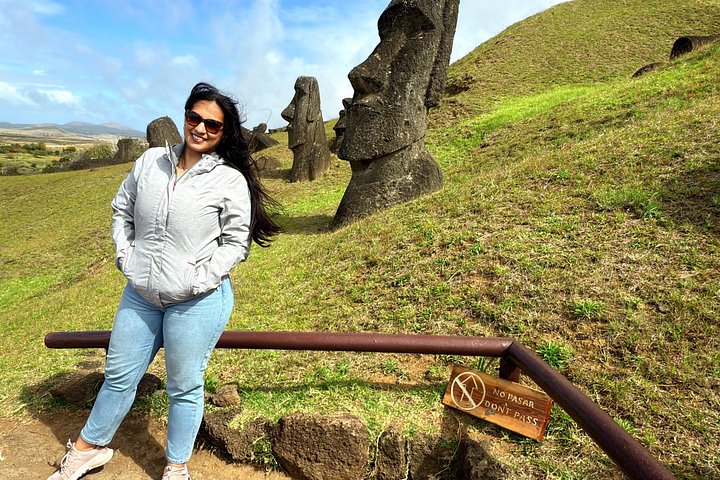
The moai are monumental statues carved from volcanic tuff, mostly at the Rano Raraku quarry. They represent ancestors, important lineage leaders who were believed to protect their descendants. Most stand on stone platforms called ahu, with their backs to the sea and their faces toward the village. Many carry a cylinder of red stone on the head, called a pukao, which was quarried at Puna Pau. Some statues had eyes of coral and stone set into the sockets, which gave them a powerful presence during ceremonies. There are nearly nine hundred moai, and the largest unfinished figure in the quarry is more than twenty metres long.
How they were moved
Nobody saw the statues move, so the explanation remains debated. Islanders say that the moai walked, directed by the spiritual power known as mana. Experiments have shown that a standing statue can be rocked forward with ropes in a walking motion, and that matches the oral tradition in a striking way. Other theories involve sledges and rollers. Guides tend to present the different explanations side by side, and you can judge them for yourself as you see the roads and the unfinished figures.
The Birdman cult
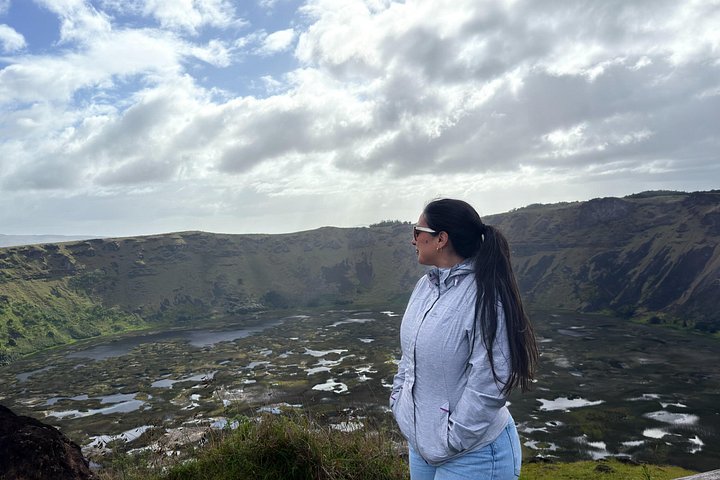
In the centuries before European contact, the focus of religious life shifted from ancestor statues to a cult centred on the creator god Make-make and the annual Birdman competition. Contestants climbed down the cliffs of Rano Kau, swam to the islet of Motu Nui, and waited for the first egg of the sooty tern. The winner's sponsor became Birdman for the year and gained status. The ceremonial village at Orongo and its rock carvings are the best surviving evidence of this tradition.
Contact and loss
The arrival of Europeans in the eighteenth century marked the start of profound change. In the nineteenth century, slave raids from Peru carried off a large part of the population, including leaders and keepers of knowledge, and disease followed. The population fell to a small number, and much traditional knowledge was lost, including the ability to read the rongorongo script. Missionaries arrived, and the island was annexed by Chile in 1888. For many decades much of the island was leased for sheep ranching and Rapa Nui people were confined to Hanga Roa.
Theories and debates
Popular accounts of Easter Island often tell a story of ecological collapse, in which the islanders cut down all the trees and destroyed themselves. Archaeologists today emphasise a more complicated picture, with rats, disease and slave raids all playing roles, and many Rapa Nui people reject the idea that their ancestors caused their own decline. When a guide presents these debates, listen with an open mind. Similarly, ideas that the statues were made by outsiders have been firmly rejected by researchers and by the community.
A living culture
Today about eight thousand people live on the island, and the Rapa Nui language, music and dance are living traditions. The Tapati festival, the carving workshops and the community-run park all show that the culture is not a museum piece. Visiting with respect, hiring local guides and buying crafts from island artisans are small ways to support it. When you stand before a moai at sunrise, you are looking at a work of art and a statement of belonging, made by people who are still here.
Reading the sites as you travel
Use what you have learned to read the landscape. At Rano Raraku, look for statues in different stages and imagine the carvers at work. At Tongariki, remember the tsunami and the restoration, and notice the different sizes and styles of the statues. At Orongo, picture the contestants poised on the cliff, and at Anakena, think about the first canoes landing. Ask your guide questions and listen to the answers, including those that challenge popular stories. History on Rapa Nui is a conversation between archaeology, oral tradition and the people themselves, and visitors are privileged to join it.